
World Press Freedom Day: UN Reveals 85% of Crimes Against Journalists Remain Unpunished
The United Nations (UN) has observed with dismay that 85 per cent of crimes committed against journalists go uninvestigated and unpunished. The UN Secretary-Gen...
 Written byEze Chidiebere Paul
The United Nations (UN) has observed with dismay that 85 per cent of crimes committed against journalists go uninvestigated and unpunished.
The UN Secretary-General, António Guterres, described the situation as an unacceptable level of impunity.
In his message to mark World Press Freedom Day, observed annually on May 3 to highlight the importance of press freedom and the safety of journalists globally, Guterres stressed that press freedom remains a key pillar of democracy, saying that the media serves as a public watchdog in society.
Guterres noted that the 1991 Windhoek Declaration strongly emphasised media freedom, which led the United Nations to dedicate the day to defending and strengthening press freedom worldwide. He warned that economic pressures, emerging technologies and deliberate information manipulation are placing press freedom under unprecedented strain.
He explained that when access to reliable information erodes, mistrust takes root, adding that when public debate is distorted, social cohesion weakens.
The UN Secretary-General said, “And when journalism is undermined, crises become far more difficult to prevent and resolve.”
He said that all freedom depends on press freedom and that without it, there can be no human rights, no sustainable development, and no peace.
Guterres also called for stronger protection of journalists and efforts to ensure a world where truth and those who report it are safe, stressing that journalists often become the first casualties in conflict, as they risk their lives to report events.
He explained that people often say that in war, truth is the first casualty, but lamented that far too frequently, the first casualties are the journalists who risk everything to report that truth, not only in war but wherever those in power fear scrutiny.
Across the globe, Guterres stated that media workers risk censorship, surveillance, legal harassment and even death, noting that there has been a sharp rise in the number of journalists killed in recent years, often deliberately targeted in conflict zones.
Continue reading

Mum-of-eight, 66, mauled to death by bear as beast drags her out of bedroom window as her friend slept
A MUM-of-eight has been killed by a vicious bear after it dragged her from her bedroom window as she slept. Lyudmila Prokofievna, 66, has become the latest vic...
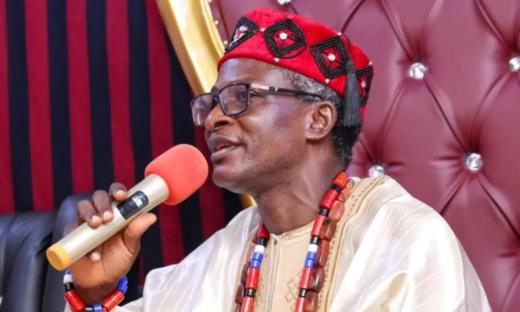
Och’Idoma moves against child marriage, FGM, unequal inheritance rights, others
The Och’Idoma and Paramount Ruler of Idoma Kingdom, Agaba’Idu Elaigwu Odogbo John, has called for the reform or outright discontinuation of 25 harmful gender an...
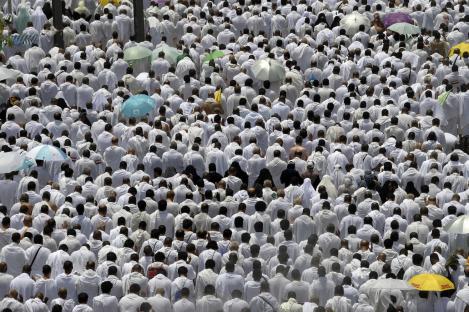
FG reviews 1978 Nigeria-Saudi air service agreement to secure more Hajj slots
The Federal Government has begun reviewing the 1978 Bilateral Air Services Agreement (BASA) between Nigeria and Saudi Arabia to help Nigerian airlines secure mo...

Oriire abduction: How kidnappers beheaded two teachers in our presence – Victim tells court
A witness of the Department of State Services, DSS, on Thursday, narrated to the Federal High Court in Abuja, how the 49 kidnapped students and teachers of scho...