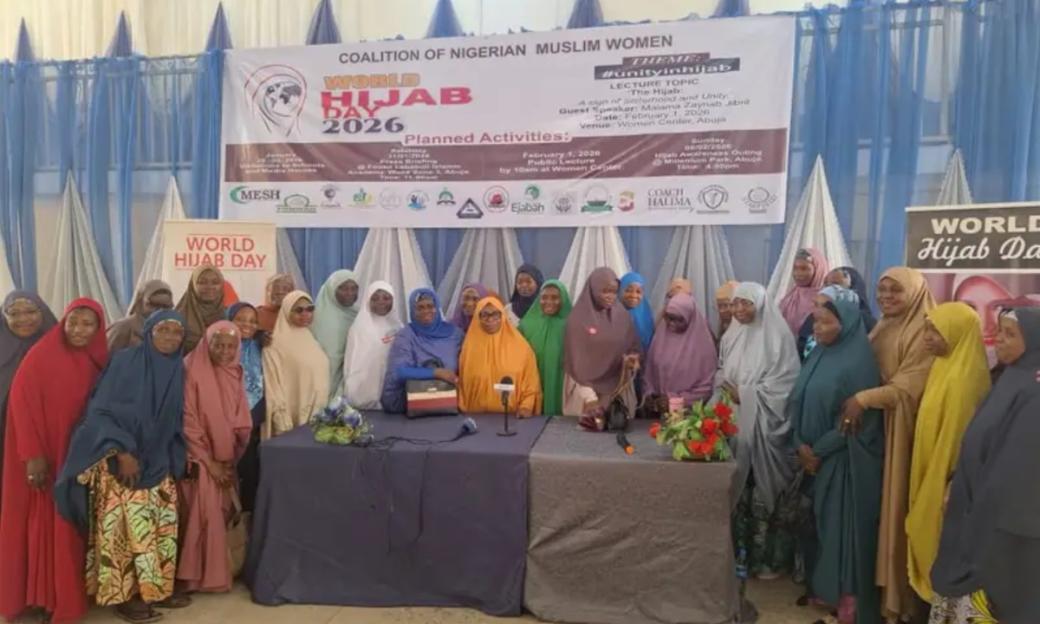
A coalition of Muslim women in Nigeria has urged the Federal Government to revisit the uniforms of the National Youth Service Corps, NYSC, to better accommodate female corps members who wear the hijab.
Speaking at a news briefing in Abuja on Saturday to commemorate the 2026 World Hijab Day, Ms. Firdausi Amasa, a member of the coalition, stressed the need for inclusivity in the NYSC dress code.
World Hijab Day, observed annually on February 1, serves as a global initiative that celebrates the significance and beauty of the Muslim woman’s attire.
The campaign was started in 2013 by Nazma Khan, who drew inspiration from her personal experiences of discrimination for choosing to wear the hijab.
Amasa noted, “Since its inception, World Hijab Day has grown remarkably, touching lives in over 190 countries, including Nigeria, and fostering understanding and unity across diverse communities.”
The theme for this year’s observance is “Unity In Hijab.”
Amasa stated that the current NYSC uniform is insufficient for Muslim female corps members and called for a complete revision to make it more inclusive.
She proposed, “We propose that Muslim students be allowed to wear a knee-length hijab.
Also, they should be exempted from the compulsory requirement to wear shorts for parade and wear long, free, white trousers instead.”
The legal practitioner also urged the National Assembly to fast-track pending legislation that would prevent discrimination based on religious attire or personal appearance.
“These legislations will demonstrate Nigeria’s commitment to justice and equity. The society must actively support reverts who choose to wear the hijab, recognising the challenges they often face from loved ones and communities,” she said.
“Acceptance, encouragement, and a prejudice-free environment are essential for their journey. Special attention should be given to those facing unique challenges by offering counseling and inclusive support to build their confidence.”
Amasa also advocated for community-driven programs that empower hijab-wearing women through mentorship, skills development, and leadership training.
“These initiatives should connect accomplished professionals with younger women for guidance, equip them with tools to excel in STEM fields, entrepreneurship, and governance, and prepare them for advocacy roles.
“The hijab should be viewed as a symbol of empowerment rather than restriction. We urge individuals, institutions, and leaders to acknowledge the hijab as a reflection of identity, values, and inclusivity.
“It connects women across diverse backgrounds while fostering understanding and unity. Let us embrace the hijab not as a barrier but as a powerful tool for promoting opportunity, respect, and diversity,” she added.
She further called on government agencies, educational institutions, and private organizations to implement policies and services that respect the religious expressions of individuals.
Amasa added that institutions must actively accommodate hijab-wearing women and recognise their significant contributions to national development. (NAN)