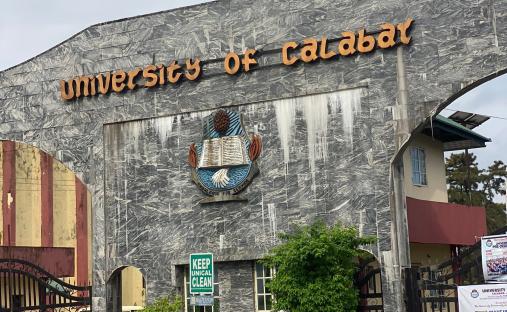
The Special Adviser to Governor Bassey Otu on Students’ Orientation, Mr Afufu Anthony Ogbor, has appealed to students of the University of Calabar, UNICAL, to remain calm over a memo issued by the Dean of Students’ Affairs, Prof Eyo Offiong Mensah, directing compulsory attendance at an interdenominational service.
The memo, dated January 14, 2026, with reference number UC/SAD/PGS/001, was addressed to all undergraduate and postgraduate students and titled “Compulsory Attendance to Interdenominational Service on Monday, 19 January 2026″.
It instructed students to be seated before the commencement of the service.
The directive has, however, triggered backlash from sections of the student body, with many faulting what they described as coercive and authoritarian language, especially in a university community that includes students of different faiths.
Some students argued that attendance at a religious activity should not be enforced, insisting that participation must be voluntary in line with constitutional guarantees of freedom of religion and association.
Reacting on social media, one Emmanuel Oko Ogar criticised the memo, saying the language employed was “markedly coercive and authoritarian in tone,” and questioned the inclusivity of making a religious service compulsory for all students.
Ogar further argued that even if a majority of students were Christians, such assumption could not justify enforcing attendance through an official administrative directive, describing the memo as “fundamentally indefensible.”
Responding to the controversy, Ogbor defended the Dean, noting that while the tone of the memo may have appeared coercive, it was not beyond correction.
He cited Chapter Four of the Nigerian Constitution, which guarantees freedom of worship and association, stressing that citizens have the liberty to attend religious activities but not under compulsion.
According to Ogbor, the intention of the memo was not to impose religious observance but to encourage students to come together to pray for peace, unity, stability and overall wellbeing within the university community.