PLANS have been drawn up for Donald Trump’s marines to storm Iran’s vital island fortresses to unlock the Strait of Hormuz, insiders told The Sun.
Despite being no more than flecks on the map, these tiny Tehran-controlled territories have outsized importance – pulling the strings on critical trade.
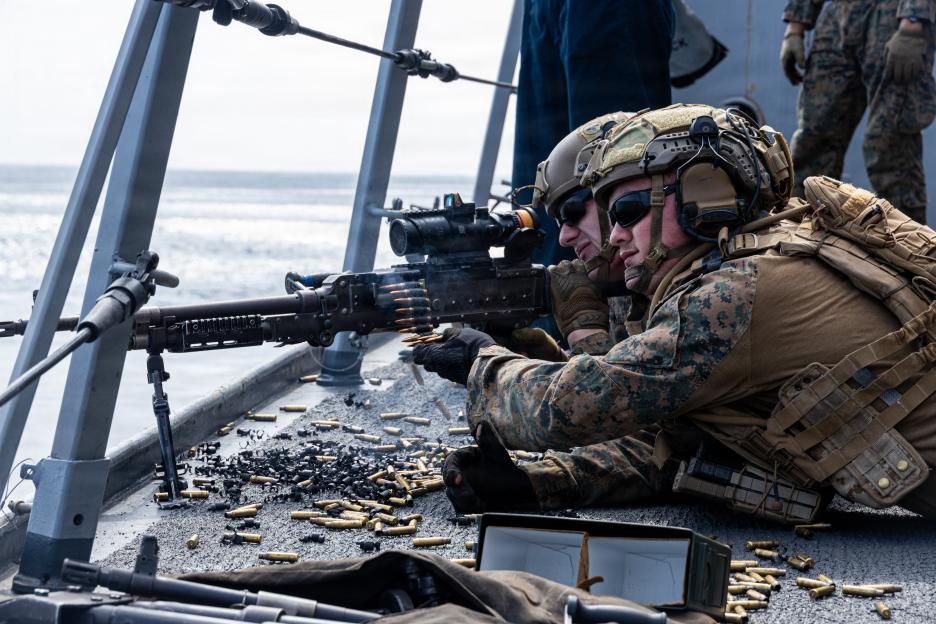 US Marines fire a M240B machine gun during a live-fire deck shoot on board USS New Orleans in the Philippine SeaCredit: Polaris
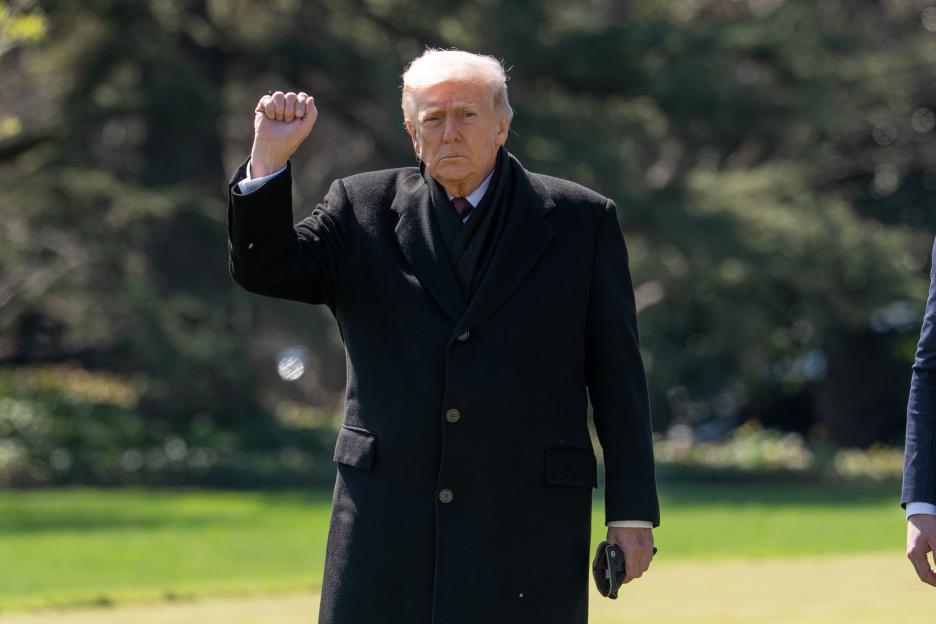 President Donald Trump before boarding Marine One in WashingtonCredit: Splash
Seizing this series of strategically located islands would – the world’s most crucial chokepoint.
Cunning Tehran has threatened to bomb any ships that travel through the shipping lane since the war started – throttling 20 per cent of the world’s oil supply.
Coupled with the regime’s attacks on energy infrastructure in the Gulf, it has fuelled fears of a global energy crisis.
A handful of boats have managed to make the journey – often ones with closer links to Iran, including China and India.
It comes as – unless it wants its power plants “obliterated”.
The furious president this week deployed Apache helicopters and low-flying jets to blitz Iranian ships near the waterway.
But now a could be gearing up to take the Iranian bases dominating entrances to the key waterway.
B-2 strategic and Abu Musa and also launch sites dug into mainland coastal cliffs earlier this week, dropping 5,000lb GBU-72 deep penetrator bombs.
In operations that usually precede ground assaults, low flying Apache helicopters and A-10 warthogs are now strafing IRGC fortifications, firing hellfire missiles and forward mounted 30mm chain cannons to eliminate any resistance.
CENTCOM commander admiral Brad Cooper said: “The aims to end Iran’s ability to project power and disrupt shipping in the straits of Hormuz.”
Following any capture, a stay-on force may be required to set up fire bases – temporary military facilities – equipped with missiles, sophisticated radar and to protect the Strait, intelligence sources told The Sun.
A stay-on-force of small unit may be required to set up improvised fire bases – which are temporary military facilities.
They would be equipped with missiles, sophisticated radar and drones to protect the strategic waterway and provide staging areas for ground raids on IRGC naval bases, intelligence sources told The Sun.
The 2,200-strong Marine Expeditionary Unit ordered to set sail to the Persian Gulf from their home base in last Saturday has been training for island-hopping operations.
They had just finished a joint exercise – planned for a potential war with in the atolls of the South China Sea – with the Japanese navy before leaving for the Gulf.
A USMC spokesman revealed: “It’s a new doctrine designed to secure or deny narrow waterways, relying on small agile Marine units instead of stationing large warships and mass infantry landings that present vulnerable targets to modern precision weapons.”
Reopening the waterway has become Trump’s top priority since the IRGC started laying mines and firing missiles at oil tankers to block the 19-mile Strait.
Despite saying on Friday he was “winding down military operations”, the Pentagon reports that additional marine reinforcements are being sent to the Gulf.
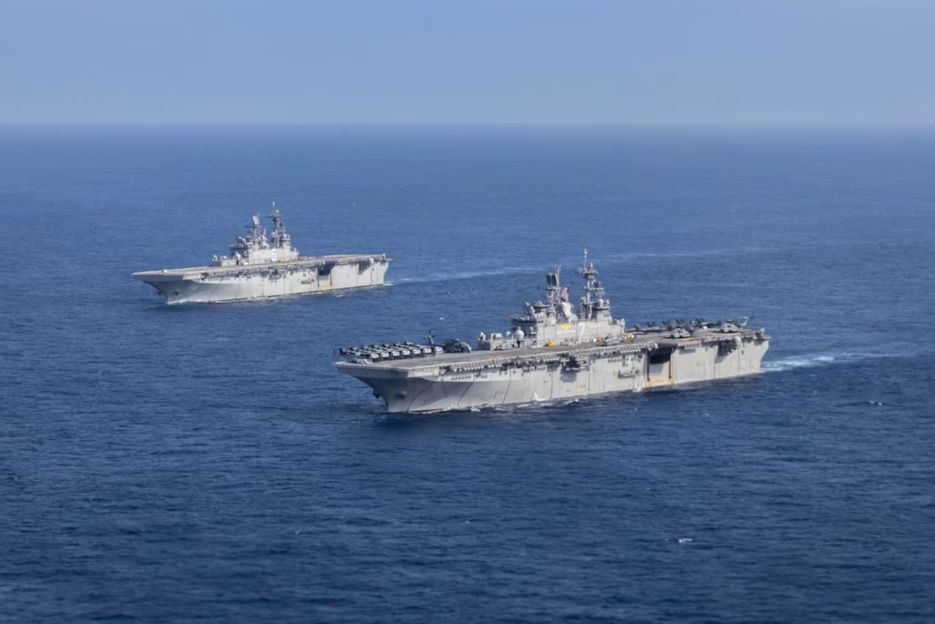 USS Tripoli (right) has left the South China Sea after island drillsCredit: U.S. Marine Corps photo by Lance Cpl. Christopher Lape
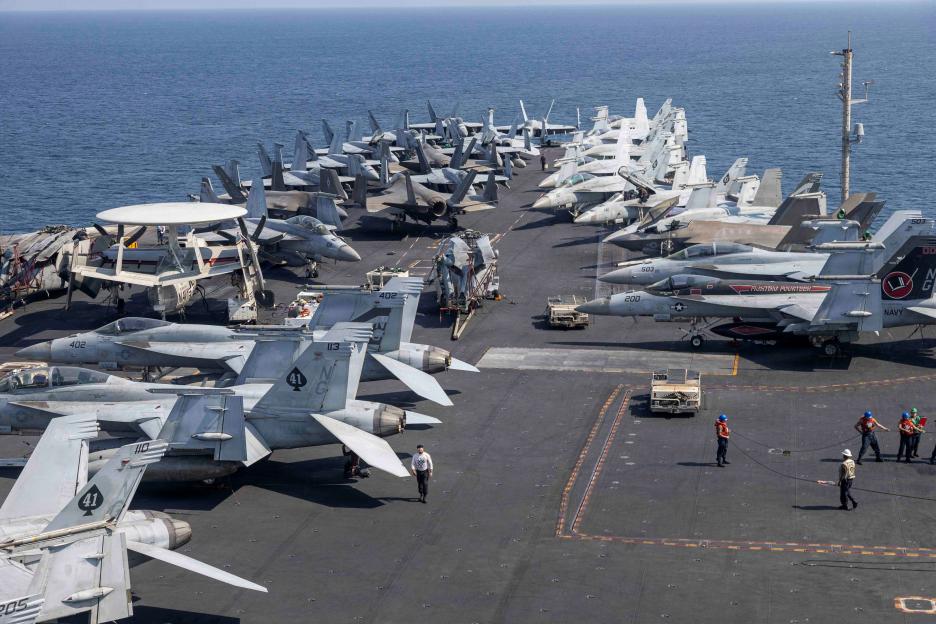 US Navy and US Marine Corps aircraft on the flight deck of USS Abraham Lincoln during the Operation Epic Fury attack on IranCredit: Reuters
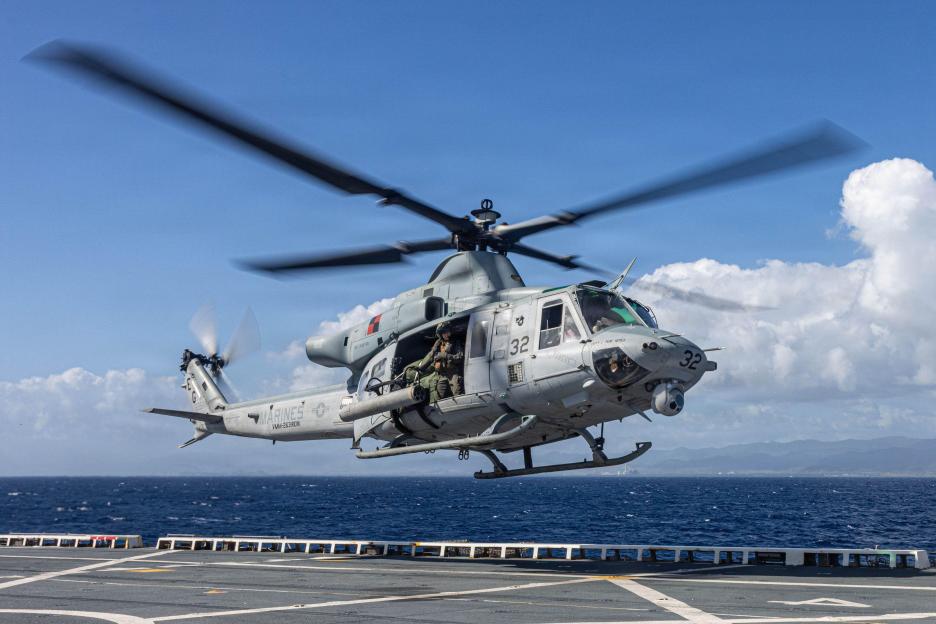 A U.S. Marine Corps UH-1Y Venom helicopter with Marine Medium Tiltrotor Squadron (VMM) 263 (Reinforced), 22nd Marine Expeditionary Unit (Special OperaCredit: Alamy
allies, including the UK, have , saying it is too dangerous for their warships.
An ex-Marine officer and career intelligence official, speaking on the condition of anonymity, told The Sun: “They will take the Hormuz island missile and drone sites.
“Plans are drawn up for that.”
V-22 Osprey rotor-wing aircraft that take off and land like helicopters but fly like planes would initially airlift marines from the amphibious landing ship USS Tripoli to island points.
The Tripoli was recently converted into a pocket aircraft carrier for airborne operations that can be launched from up to 200m off shore.
This reduces the mothership’s exposure to anti-ship missiles and danger to landing craft from sea mines.
Space on the Tripoli that once held hovercraft – such as giant inflatable landing boats – has been turned into a hangar for aircraft maintenance and extra storage for parts, ammunition and supplies.
Covered by missile firing viper attack helicopters off the Tripoli, CH-53 Sea Stallion helicopters armed with .50 chain guns would insert advance teams of Force Recon units to conduct in depth reconnaissance and set up sniper positions to cover the main force.
The advance teams would call in air strikes by F-35 Stealth aircraft flying off Tripoli to flatten pockets of resistance that may have survived the heavy B-2 bombings before the main force lands.
With their beachheads secure, the marines would install air defence and radar systems to closely track air and sea traffic, and fuel weapon resupply posts for continuous helicopter re-provisioning and support.
Carefully camouflaged HIMARS batteries firing lethally accurate long-range ATACAMs would be erected to neutralise IRGC threats within a 300-mile radius.
And covert marine firebases could also operate from the coasts of Oman facing Iran across the narrow Hormuz straits.
The Pentagon announced on Friday that an additional marine expeditionary unit has set sail to the Gulf on board the warfare vessel USS Boxer – similar to the Tripoli with a higher amphibious capacity.
Paradise islands in Strait of Hormuz are ‘unsinkable aircraft carriers’
by , Chief Feature Writer
GAZING over the sparkling waves of the Strait of Hormuz, the world’s most strategic stretch of water appears deceptively tranquil.
From my vantage point on golden sands near the border with Oman, a flock of seagulls feeds noisily at the water’s edge.
With a 28C sun beating down, an elderly man sits on his plastic chair positioned so that the incoming tide laps calmingly at his feet.
It could be an idyllic, off the beaten track beach in Greece or Spain.
Yet, through the heat haze a few dozen miles distant is . Wounded but vengeful, it has the Strait in a stranglehold.
A fifth of the world’s oil and a third of its fertiliser passed through here before the war began.
Then the mullahs pressed their equivalent of the nuclear button. Mines were laid in this maritime bottleneck and some 20 commercial vessels were hit by missiles or drones.
It was Iran’s doomsday option and they soon had the global economy by the proverbials.
For the Strait provides the only route for the super tankers shipping black gold from the oil fields of the Persian Gulf to the open sea.
Images of the Thai-flagged Mayuree Naree cargo ship ablaze after being hit by two Iranian missiles as it tried to pass through these waters sent shock waves around the globe.
Prices will soon spike at British petrol pumps and in family shopping baskets if these shipping lanes remain closed to most vessels.
President Donald Trump needs to get tankers flowing through the waterway once more to spare the world economy a 1970s-style energy crisis.
Here at Ras Al Dahrah, at the mouth of the Strait, I’m staring out over sun-dappled waves where a potential catastrophe is brewing which could define the era we live in.
If Iran maintains its stranglehold here, Britain faces a “significant shortfall of supply” in oil and gas within the next two months, industry experts say.
Dubbed America’s 911 force thanks to their quick combat readiness, the rapid-response marine taskforce specialises in amphibious ground and aviation combat as well as logistical support.
They were some of the first boots on the ground to reach in Afghanistan in 2001.
Usually based in US outposts in Okinawa, Japan, the unit will likely be tasked with retaking control of the Strait of Hormuz.
Though the unit is dwarfed by the 50,000 US troops already in the Middle East – their specialities make them a key player for any upcoming ground assault.
Among Iran’s minute yet valuable islands are Abu Musa, Greater Tunb and Lesser Tunb.
Sat on the approach to the Strait from the Persian Gulf, they have been transformed into Iran’s “unsinkable aircraft carriers” – bristling with mine layers, drones and missile batteries.
Little more that 20 miles wide at its narrowest point, tankers using the deep-water shipping lanes here have to pass directly between Abu Musa and the Tunbs.
Maritime traffic can be closely monitored from the islands and potentially attacked.
Iranian Admiral Alireza Tangsiri once called Greater Tunb “an unsinkable aircraft carrier strategically positioned in the middle of the Strait of Hormuz with full control over the entrance and exit routes of the Strait”.
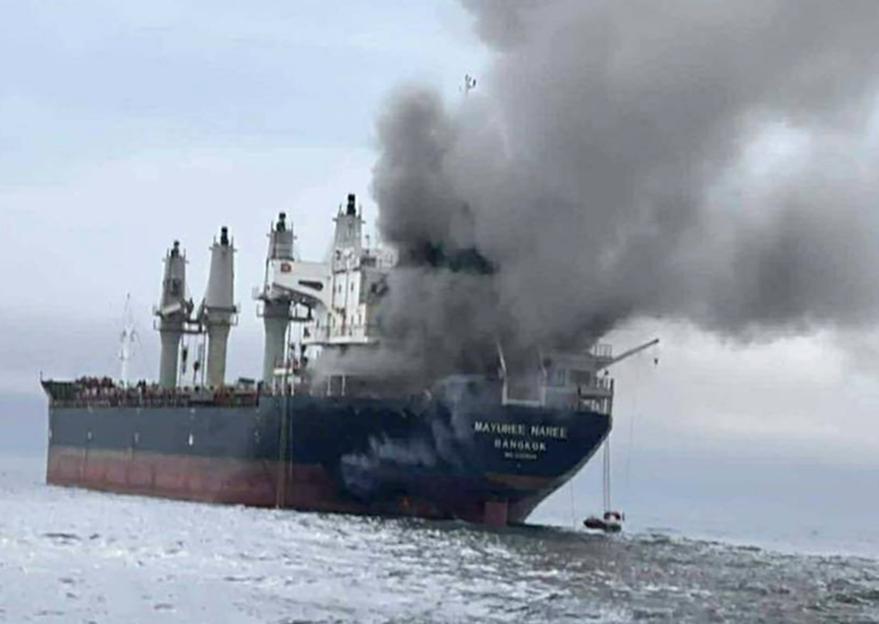 Thai-flagged cargo ship Mayuree Naree on fire after being hit by Iranian missiles in the Strait of HormuzCredit: EPA

The largest of the islands is Qeshm, which has become a frontline fortress as its sheer size allows it to act as a cork to the narrow waterway entrance.
Sat at the mouth of the shipping lane, it hosts naval vessels and missiles in underground tunnels – controlling the flow of ships in and out.
Close by to Qeshm is the much smaller Larak, which serves as a critical deepwater terminal for exporting Iranian oil – often acting as a transfer point to tankers outside the Gulf.
It is used by the IRGC Navy and has premium surveillance capability over the narrow waterway.
Qeshm is also flanked by the equally small Hormuz, where Tehran docks small attack ships.
Meanwhile, near the entrance of the Strait is Kish, an extremely small economic hub west of Qeshm that houses an airport.
The – the regime’s economic jugular.
Around 300 miles from the Strait, it is where around 90 per cent of the rogue state’s crude is processed.
Trump has also been mulling sending in troops to seize Kharg to checkmate Iran’s crumbling regime.
Oil exports make up around 40 per cent of Iran’s budget, and wrestling this tiny five-mile island from the clutches of barbaric clerics would thwart its ability to fund weapons wreaking havoc across the Middle East.
And Iran would no longer be able to bankroll bloodthirsty proxy groups, including Hezbollah or the Houthis – or its nuclear scheme.
Trump could also use the intact oil terminals for the ultimate power play – both as a bargaining chip to unblock the Strait and to ensure whoever rules Iran next does so under Washington’s thumb.
Trump considers INVASION of Iran’s vital Kharg oil island
by , Foreign Editor
DONALD Trump is mulling plans to send in troops to seize Iran’s vital oil processing island in a dramatic bid to free blockaded shipping.
The US president is considering a bold move to occupy or seal off – which processes 90 per cent of the rogue state’s crude.
More than 2,500 US marines are closing in on the war zone as the defiant mullahs continue to ramp up global economic chaos by attacking their neighbours’ energy plants.
But analysts warned putting boots on the ground on the island – 15 miles off the Iranian coast – would be a huge gamble risking massive casualties.
Four US sources confirmed Trump is weighing up the option of a ground invasion on Friday.
A source with knowledge of White House thinking told Axios.”We need about a month to weaken the Iranians more with strikes, take the island and then get them by the balls and use it for negotiations.”
Three Marine units are on their way to the region but reinforcements will be needed if Trump green lights the plan.
The source added: “He wants Hormuz open. If he has to take Kharg Island to make it happen, that’s going to happen. If he decides to have a coastal invasion, that’s going to happen.
“But that decision hasn’t been made.
“We’ve always had boots on the ground in conflicts under every president, including Trump.”
US Senator Tom Cotton, who chairs the Senate Intelligence Committee, said Trump had been “prudent” not to rule out a ground invasion but would not say whether he supported the plan.
Cotton contended that closing the strait was an act of desperation by Iran, but said Trump had “mountains of plans” for that contingency.
Retired Rear Admiral Mark Montgomery warned an island mission could expose US troops to an unnecessary degree of risk – without guaranteeing Iran’s defeat.
He said: “If we seize Kharg Island, they’re going to turn off the spigot on the other end. It’s not like we control their oil production.”