Nigeria’s groundwater resources are under growing threat from declining water tables, pollution, overuse, and climate change, Prof. Idris-Nda Abdullahi of the Federal University of Technology (FUT), Minna, has warned.
He called for urgent reforms by the government to protect and sustainably manage the nation’s aquifers.
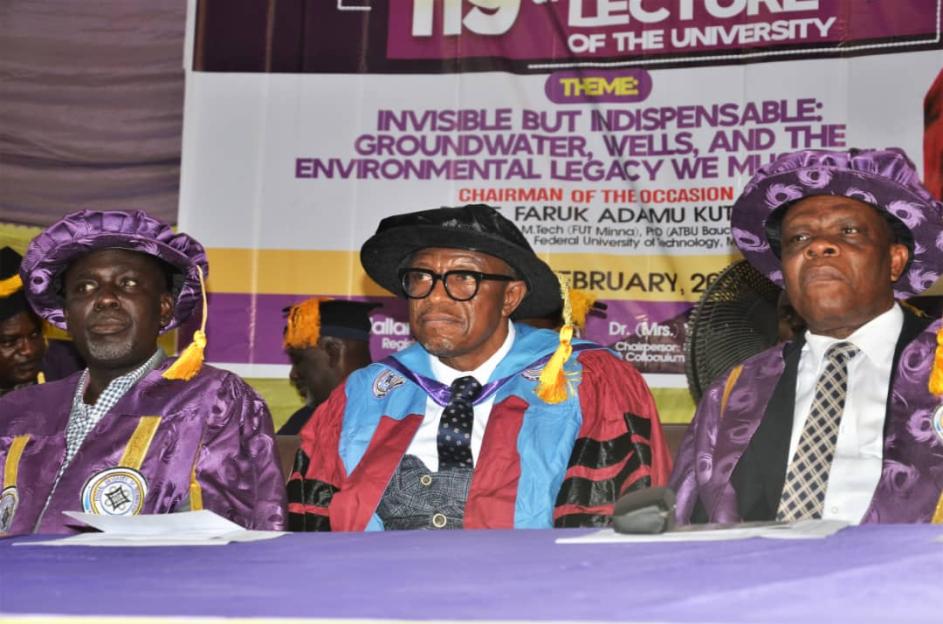
Prof. Abdullahi made the appeal while delivering the 119th Inaugural Lecture of FUT Minna on Thursday, 12 February 2026, at the University Auditorium, Main Campus.
The lecture, titled “Invisible but Indispensable: Groundwater, Wells, and the Environmental Legacy We Must Build,” highlighted the vital role groundwater plays in sustaining human life, ecosystems, and economic development.
He noted that about 60 per cent of Nigerians depend on groundwater for drinking, including 73 per cent of rural residents and 45 per cent of urban dwellers, while Minna alone relies heavily on boreholes and wells for domestic supply.
According to him, groundwater is a hidden yet invaluable natural resource stored in aquifers beneath the Earth’s surface and replenished through rainfall infiltration”
“Although water covers more than 70 per cent of the planet, only a small fraction is freshwater, with groundwater constituting a significant share of the world’s accessible potable water”.
Prof. Abdullahi outlined modern exploration methods, best practices in well construction, and the importance of professional hydrogeological oversight.
He also dispelled misconceptions, stressing that groundwater does not flow in underground rivers and that deeper drilling does not guarantee more water.
Linking groundwater to Sustainable Development Goals, he highlighted its role in poverty reduction, food security, public health, and sustainable urban development.
The lecturer further called for stricter policy enforcement, proper borehole licensing, professional supervision, improved water quality monitoring, climate-resilient infrastructure, and urban planning strategies to protect aquifers.
Prof. Abdullahi urged policymakers, professionals, and communities to recognize groundwater as a critical environmental legacy for future generations.
Vice-Chancellor Prof. Faruk Adamu Kuta commended the lecturer for delivering a timely and impactful presentation on one of Nigeria’s most pressing environmental and developmental concerns.
He described the lecture as intellectually stimulating and socially relevant, noting that it reflects the vital role of universities in generating research that informs public policy and promotes national development.