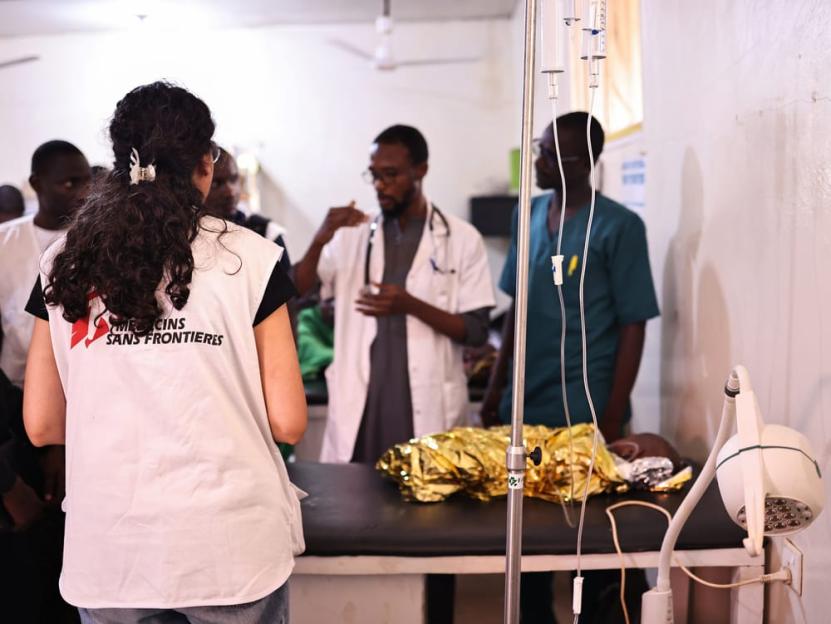
Nigeria recorded the highest levels of malnutrition in 2025 among 77 countries, Médecins Sans Frontières, MSF, Country Representative for Nigeria, Dr Ahmed Aldikhari, has revealed.
Aldikhari made the disclosure at an event held in Abuja to launch MSF’s 2025 Country Activity Report for Nigeria.
The report noted that malnutrition and recurring disease outbreaks reached critical peaks amidst healthcare gaps.
“Malnutrition was one of the biggest highlights that we witnessed in Nigeria. The malnutrition cases we had in Nigeria was the biggest in the world and we are operating in 77 countries in the world,” Aldikhari said, nothing that MSF is working with the Nigerian government and relevant non-governmental organizations, NGOs, to address the problem.
He identified factors such as climate change and insecurity, especially in northern states regarded as Nigeria’s food basket, lack of access to infrastructure, poorly equipped health facilities, huge gap in human resources and low renumeration for medical practitioners, as well as funding gaps, as factors that contribute to the high level of malnutrition.
The MSF 2025 Country Activity Report for Nigeria highlighted a year marked by rising malnutrition, repeated disease outbreaks and persistent barriers to maternal healthcare across the areas where the organisation works. Some of the key highlights in the report touch on the rising malnutrition crisis, recurrent disease outbreaks and how maternal mortality continue to be of concern.
MSF has worked in Nigeria since 1996, responding to disease outbreaks, malnutrition, maternal health emergencies, natural disasters, conflict-related crises, and gaps in access to healthcare.
In 2025, MSF ran regular medical projects in ten states including Bauchi, Borno, Cross River, Ebonyi, Jigawa, Kano, Katsina, Kebbi, Sokoto and Zamfara and established a new presence in Kaduna. MSF also responded to emergencies in these states and others including Niger and Adamawa.
In collaboration with health authorities, MSF teams treated more than 440,000 children for malnutrition, more than 300,000 people for malaria, and assisted in over 33,500 deliveries across Nigeria, delivering lifesaving care in some of the country’s most underserved and crisis-affected areas.
Highlighting the rising malnutrition crisis in the country, the report stated that MSF teams have observed a continued increase in malnutrition cases across several projects in northern Nigeria since 2022, with 2025 marking the highest number of admissions recorded by MSF teams so far.
In 2025, MSF treated 353,989 children with severe acute malnutrition through outpatient programmes and admitted 90,723 children with acute malnutrition and medical complications into inpatient stabilisation centres in MSF-supported facilities.
“The 2025 data tells a harrowing story: with over 440,000 children put on treatment, it is the year with highest admissions for malnutrition we’ve had in Nigeria in recent years.
“We are seeing a vicious cycle where malnutrition is both a cause and a consequence of diseases such as measles, malaria, and diphtheria among others, continue to affect vulnerable communities, especially when healthcare is delayed or inaccessible,” MSF Country Representative for Nigeria, Aldikhari said.
According to the report, conflict and insecurity, displacement, several consecutive years of inflation, flooding, drought and rising food prices continue to affect families’ ability to access food and healthcare. Humanitarian funding cuts are also increasing pressure on already overstretched services in high-need areas.
Noting that disease outbreaks continue to overwhelm health facilities, the report observed that Nigeria continues to face recurring outbreaks and seasonal peaks of infectious diseases including cholera, Lassa fever, measles, meningitis, diphtheria and typhoid fever, particularly during the rainy season.
“In 2025, MSF teams treated 341,239 patients for malaria, 38,753 children for measles, 6,123 for diphtheria, 985 patients for meningitis across MSF-run and MSF-supported facilities in several states. MSF noted that disease outbreaks and malnutrition are closely interconnected, with repeated illness worsening nutritional vulnerability among children.
“To respond to seasonal surges, MSF works closely with federal and state health authorities alongside other actors to scale up emergency interventions, support vaccination campaigns, reinforce medical teams and supplies, distribute mosquito nets, strengthen vector control measures, and support routine and catch-up vaccinations,” the report said.
Aldikhari added, “Many of these illnesses are preventable. Strengthening vaccination coverage, water and sanitation systems, disease surveillance and access to timely treatment remains critical.”
The report also stated that maternal health remains a major concern in Nigeria.
“Nigeria continues to record some of the highest maternal and newborn mortality rates globally, despite many of these deaths being preventable through timely access to quality healthcare. Women in especially in rural and conflict-affected areas continue to face significant barriers to healthcare, including long distances to facilities, insecurity, transportation challenges, overstretched hospitals, cost of care and weak referral systems.
“In 2025, MSF assisted 33,590 deliveries, conducted 119,469 antenatal consultations and carried out 224 fistula surgeries across MSF-run and supported facilities. MSF teams continue to receive women with severe complications linked to delayed access to care, including obstructed labour, severe bleeding, infections and eclampsia (caused by high blood pressure),” the report added.
Aldikhari stressed that timely access to emergency obstetric and newborn care can save lives. “There is an urgent need for stronger investment in primary healthcare, referral systems, staffing, equipment and emergency maternal services, especially in underserved areas,” he said.