
Naira Falls Against US Dollar in Both Official and Black Markets
The naira on Monday began the week with depreciation against the United States dollar across official and parallel foreign exchange markets. The Central Bank of...
 Written byEze Chidiebere Paul
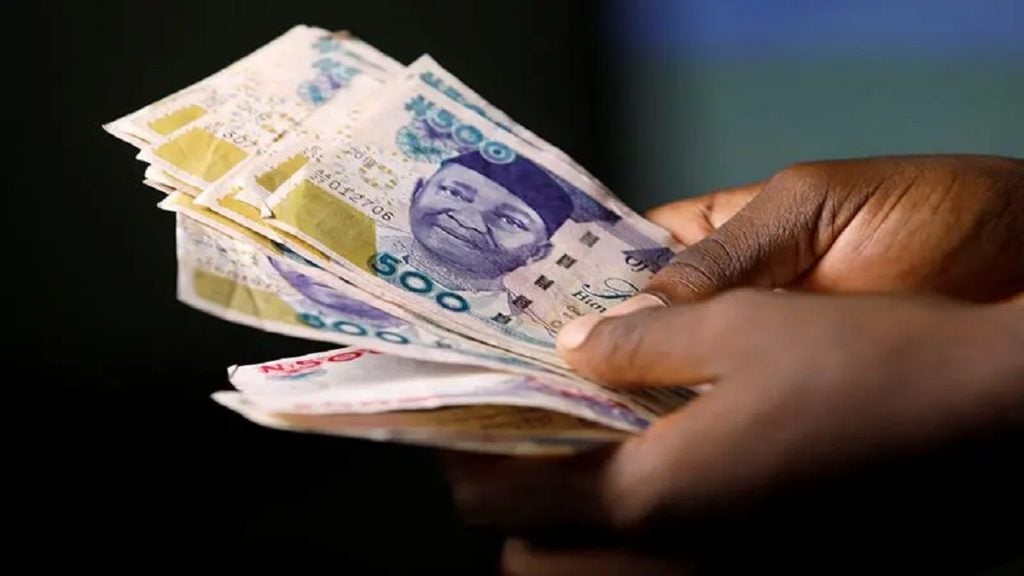
Table of Contents
- Depreciation of the Naira
- Central Bank Data
- Official Market Rates
- Black Market Rates
- External Reserves
- BDC Operators
The Naira started the week on Monday with a decline against the United States dollar in both the official and parallel foreign exchange markets.
Data from the Central Bank of Nigeria indicated that the Naira further depreciated on Monday to N1,451.86 per dollar, a decrease from N1,450.4287 exchanged last Friday.
This implies that in the official market, the Naira fell by N1.43 on Monday compared to the closing rate of N1,450.43 from the previous week.
In the parallel market, the Naira experienced a more significant drop of N15 on Monday, falling to N1,490 per dollar, down from N1,475 on Friday.
This decline occurs despite Nigeria’s external reserves reaching a six-year peak of $45.11 billion as of December 5th, 2025.
The situation also follows the Central Bank of Nigeria's announcement on Monday regarding a list of Bureau De Change (BDC) operators in the country.
Frequently Asked Questions
What caused the depreciation of the Naira?
The depreciation of the Naira is influenced by various factors, including market demand and supply dynamics, as well as external economic conditions.
How does the black market rate compare to the official rate?
The black market rate is typically higher than the official rate, reflecting the differences in supply and demand in the two markets.
What is the current status of Nigeria's external reserves?
As of December 5th, 2025, Nigeria's external reserves have reached a six-year high of $45.11 billion.
Continue reading
Nigeria’s renewable energy push gets fresh $5m investment
The move to tackle inadequate supply of electricity in Nigeria through adoption of renewable energy has received a fresh boost with a $5 million investment that...
BREAKING: NNPCL increases fuel price by N85/litre
The Nigerian National Petroleum Company Limited, NNPCL, has increased the pump price of Premium Motor Spirit, PMS, popularly known as petrol. A market survey by...
30 ships carrying fuel, food, other goods expected at Lagos ports – NPA
The Nigerian Ports Authority, NPA, has announced that 30 vessels carrying petroleum products, food commodities and other cargoes are expected to arrive at the A...
TCN announces blackout in three states
The Transmission Company of Nigeria, TCN, has announced a power outage in parts of Kogi, Edo and Ondo States. TCN, in a statement on Monday, said the outage is...