Table of Contents
- Rejection of Claims
- Historical Accuracy
- Middle Belt Identity
- Impact of Colonialism
- United Middle Belt Congress
- Contemporary Politics
- Conclusion
EDITED
The Middle Belt Forum (MBF) has dismissed claims that the forum is a recent political construct aimed at destabilizing the North.
The President of the forum, Dr. Pogu Bitrus, characterized such assertions as historically inaccurate and intended to undermine the increasing political awareness in the Middle Belt.
A statement released by the forum’s spokesman, Luka Binniyat, on Tuesday indicated that, in a comprehensive response to a widely circulated article titled “The Manufactured Middle Belt: The Untold History, Foreign Backing and the Agenda to Fracture Northern Nigeria,” authored under the pseudonym Safyan Umar Yahaya, Bitrus asserted that the narrative misrepresents both history and colonial records.
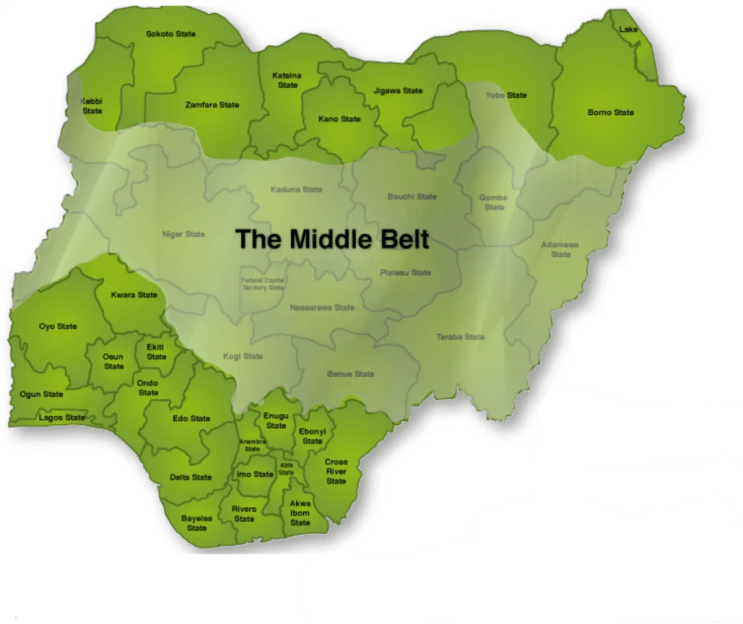
Bitrus clarified that the Middle Belt pertains to indigenous ethnic nationalities of Northern Nigeria that existed outside the authority of the Sokoto Caliphate and the Kanem-Borno Empire prior to British colonization, noting that these groups currently span 14 northern states and the Federal Capital Territory.
He further explained that the Middle Belt comprises indigenous peoples who were never conquered or governed by the Islamic caliphates of Sokoto and Borno before colonial rule, emphasizing that this stance is supported by historical scholarship rather than political sentiment.
He stated: “Pre-colonial political entities such as the Kwararafa Confederacy and the Jukun states; the Igala Kingdom, Borgu Kingdom, the Nupe Kingdom, and the Zuru (Lelna) Kingdom in present-day Southern Kebbi, along with Tiv, Idoma, Gbagyi, Birom, Angas, and Eggon societies, among others, had distinct political systems and resisted slave raids and forced Islamization.”
He contended that British colonial conquest further shaped the political consciousness of the Middle Belt, noting that colonial administrators documented prolonged resistance by Middle Belt communities to colonialism, in contrast to the relatively swift subjugation of emirate enclaves.
Due to this resistance, Bitrus explained that the British imposed “indirect rule” by force, subordinating Middle Belt groups to emirate authorities that the majority of Middle Belt peoples had resisted. He added that this enforced arrangement, rather than any foreign conspiracy, laid the groundwork for subsequent agitation.
He also refuted claims that the Middle Belt lacked recognition before the 1940s, describing reliance on colonial political maps as “intellectually indefensible.”
According to him, colonial correspondence referenced the Middle Belt as early as the first decade of the 20th century, although British authorities resisted the establishment of a Middle Belt Region to maintain the political dominance of Hausa, Fulani, and Kanuri oligarchs.
Regarding the United Middle Belt Congress (UMBC), led by the late Joseph Sarwuan Tarka, Bitrus explained that the movement articulated long-standing grievances, including land dispossession, political exclusion, and cultural suppression.
He also dismissed claims of missionary or foreign manipulation in the formation of the UMBC, asserting that Middle Belt leaders were among the most educated Nigerians of their time, who directly experienced the suppression, oppression, and exploitation of their people's labor and resources, and were sufficiently educated to form alliances to resist injustice.
Addressing contemporary politics, Bitrus stated that the Middle Belt movement is not separatist but seeks recognition, equity, and freedom from what he described as an imposed “Arewa identity.”
He further dismissed attempts to portray the Middle Belt as a religious project, noting that the region remains religiously diverse, with Muslims, Christians, and adherents of traditional religions represented within the MBF leadership.
He argued that the long-assumed Hausa-Fulani political bloc is increasingly fracturing, citing growing dissent among Hausa intellectuals and what he described as manufactured Fulani violence affecting rural Hausa communities.
Dr. Bitrus, who hails from Chibok in southern Borno State, stated that the current developments reflect not a conspiracy against the North, but what he termed the “collapse of an artificial political arrangement sustained by history and power rather than consent.”
Frequently Asked Questions
What is the Middle Belt Forum?
The Middle Belt Forum (MBF) is an organization that represents the interests of the indigenous ethnic nationalities of the Middle Belt region in Northern Nigeria.
What are the main objectives of the Middle Belt movement?
The Middle Belt movement seeks recognition, equity, and freedom from imposed identities, particularly the “Arewa identity.”
Is the Middle Belt movement separatist?
No, the Middle Belt movement is not separatist; it aims for recognition and equity within the political landscape of Nigeria.