IRAN’S striking power has been majorly degraded 10 days into Operation Epic Fury, UK experts have warned.
Matthew Savill, director of military sciences at RUSI, revealed that Iranian losses are mounting quickly – so much so that the regime could run out of functioning missile launchers by the end of the week.
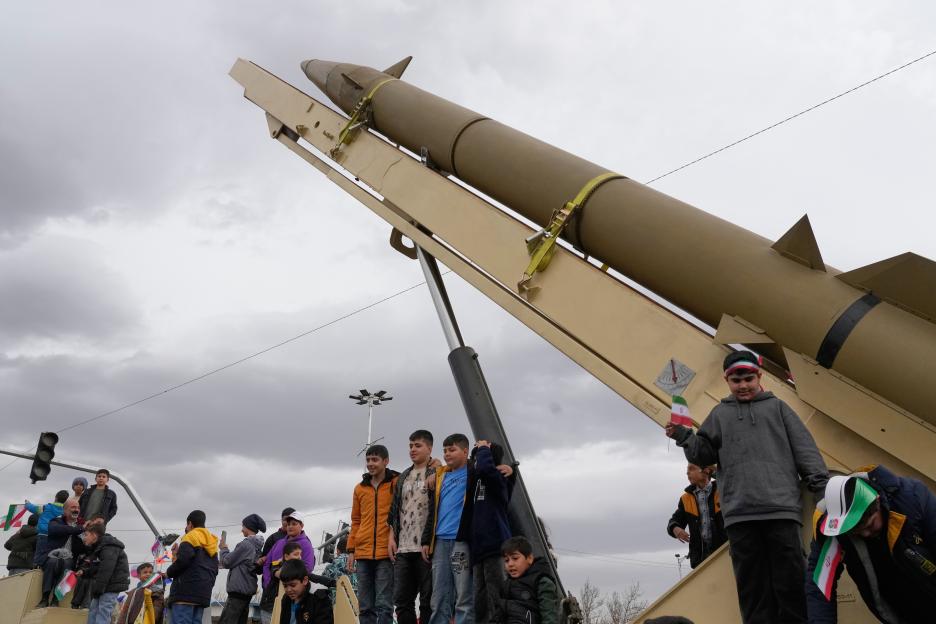 Boys stand on a launcher of an Iranian domestically-built missile during an annual rally marking 1979 Islamic Revolution in TehranCredit: AP
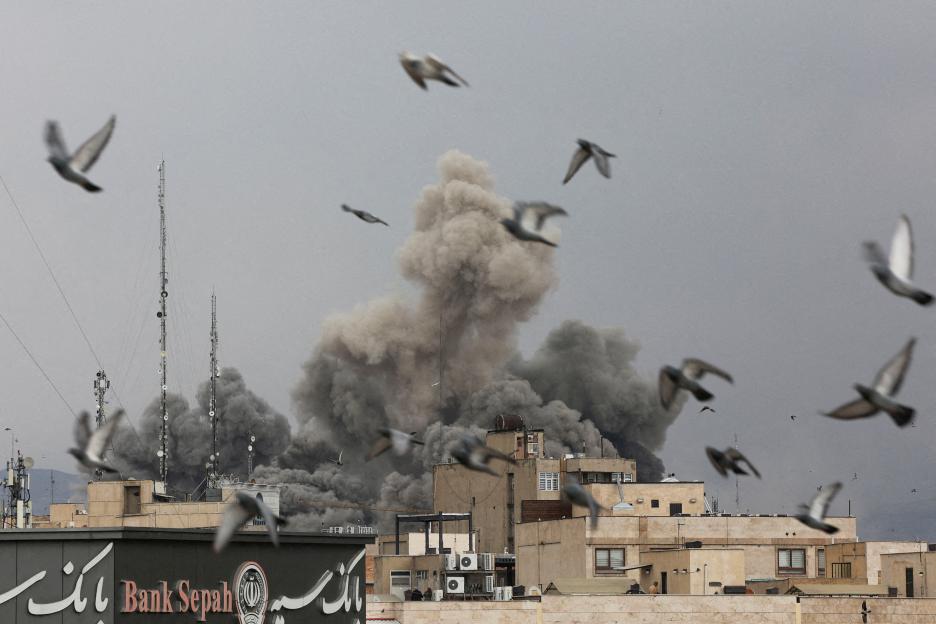 Birds fly as smoke rises following an explosion in TehranCredit: Reuters
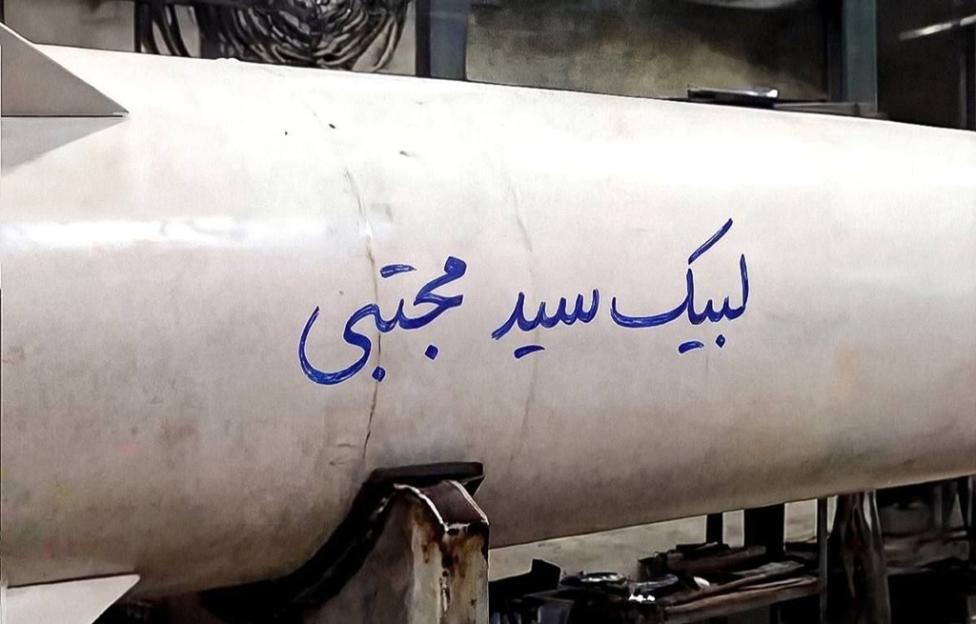 Tehran launches first missile strike on Israel under new supreme leaderCredit: IRIB
“What you now have is a campaign that is doing a combination of hunting for the remaining ballistic missiles and critically, their launchers as that is a bottleneck,” he said during a briefing on Monday.
“If the Israeli figures are to be believed then [Iran] only has an estimated 150 launchers left.”
Savill added that at the current rate of attrition, Iran will not be able to launch ballistic missiles from mobile launchers by the end of this week.
That removes “significant proportion” of Iranian strike power, he warned.
This comes days after the US Central Command (CENTCOM) Commander Admiral Brad Cooper revealed that ballistic missile attacks from Iran have declined by roughly 90 per cent since the strikes began.
Israel has claimed to have struck over 3,000 targets nationwide across 30 of Iran’s 31 provinces.
It said the IDF has conducted 2,600 sorties in 150 strike waves, dropping an estimated 6,500 munitions.
Speaking of the scale of the air operation, Savill called it “overwhelming” and said that the US and Israel are putting out a number of daily strikes that approaches the first Gulf War.
“The US is mostly using a lot of its firepower against targets further south, with the Israelis concentrating around Tehran,” he said about the range of targets.
“Now, a heavy focus is on the navy and the coastal defence forces because they threaten the Strait of Hormuz, as well as ballistic missile launch and production site and the launchers themselves.
“There has been relatively little – although not nothing – aimed at Iran’s nuclear programme.”
Donald Trump pushed the idea of the war ending soon, but has remained , after oil prices skyrocketed to an all-time high in six years.
At the same time, senior Israeli officials told local media that attacks on Iran will continue “indefinitely”.
“We will eliminate most of the launchers, the Israeli public will return to normal and then we will not be limited in time,” they said, claiming that 80 per cent of launchers have been destroyed.
Benjamin Netanyahu also vowed to pursue a prolonged military operation on Iran, saying that “there is no doubt that with the actions taken so far, we are breaking their bones.”
Despite the confidence exuded by both US and Israeli officials, Dr Burcu Ozcelik, senior research fellow for Middle East Security, warned that Iran is yet to use its “wild card” in the war.
Speaking about the spillover picture across Lebanon, Iraq, and Yemen – the jurisdictions most closely affiliated with Iran’s axis of resistance, she said that the response has been “quite divisive”.
Follow the latest on the Iran war…
Trump warns
Navy prepares trapped Brits
Iran “tried to ” after Khamenei’s death
US builds up huge at UK base
New Iranian
Iran conflict as markets fluctuate
“That tells us something about the limits of Iran’s axis under a pressure campaign,” she explained.
“The spillover has been most directly felt and seen in Lebanon. Hezbollah was the first to step up its strikes against Israel in solidarity with Iran. But the pressure is growing on Hezbollah.
“We are seeing the possibility of a larger scale Israeli ground invasion in Southern Lebanon now.
“Iran-linked Iraqi armed groups appear more divided and restrained than Tehran might have assumed, but the logic being that is that Iraq is useful to Iran.
“The Houthis in Yemen remain the wild card still.
“They are capable of widening the war, but have not yet fully committed to doing so beyond solidarity demonstrations and rallies and a high level of escalatory rhetoric. The mixed picture suggests that Iran’s network still has disruptive capability, but it is not responding as a cohesive block.”
Despite the monumental losses, the commander of the Aerospace Force of Islamic Revolutionary Guard Corps (IRGC) said Iran will no longer launch missiles carrying warheads lighter than one ton at US and Israeli targets.
Majid Mousavi warned that missile attacks will intensify even further, after firing barrages of missiles and drones at Israel, Jordan, Iraq and Gulf states that host US bases.
Iran has also been targeting energy infrastructure which – combined with its stranglehold on the Strait of Hormuz – sent oil prices soaring.
Parliament speaker Mohammad Bagher Qalibaf confirmed earlier today that his government is “definitely not looking for a ceasefire.”
“We believe that the aggressor should be punched in the mouth so that he learns a lesson so that he will never think of attacking our beloved Iran again,” he lashed out on X.
Iran is home to one of the largest and most diverse missile arsenals in the Middle East – from mortars to Shahed drones that have caused carnage across the region in the past week.
The “higher tier” of weaponry are the short-range and medium-range ballistic missiles, which play a key role in the country’s military strategy.
Many of Iran’s missile sites are in and around Tehran. There are at least five known underground “missile cities” in various provinces, including Semnan and Kermanshah, as well as near the Gulf region.
During the 12-day war with Israel last June, Iran fired ballistic missiles into Israel, killing dozens of people and destroying buildings.
The Institute for the Study of War (ISW) and AEI Critical Threats Project said Israel “likely destroyed around a third of the Iranian missile launchers” during the conflict.
Iranian officials have said Tehran has recovered from the damage incurred during the war.
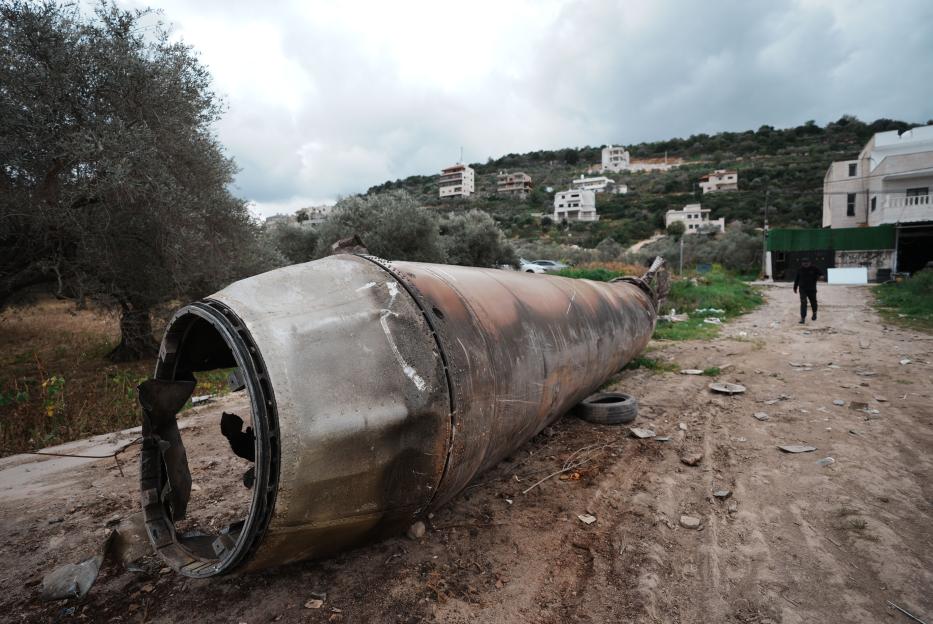 Debris of a missile fired from Iran toward Israel lies in the Beni Zeid area near Ramallah in West BankCredit: Getty
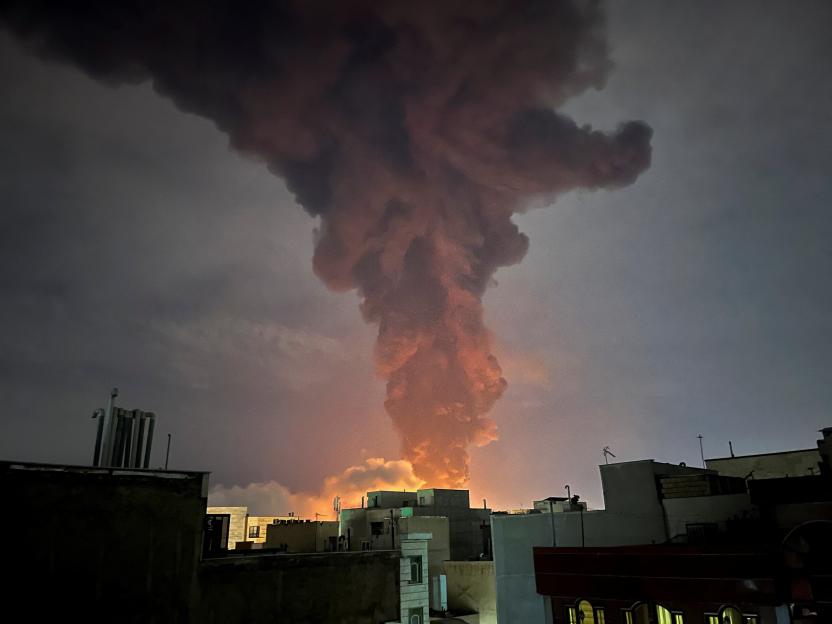 Smoke rises following an explosion in TehranCredit: Reuters