Table of Contents
- Introduction
- Youth and Climate Action
- Environmental Challenges
- Women and Pollution
- Broader Environmental Concerns
- School of Ecology Overview
A Civil Society Organization, the Health of Mother Earth Foundation (HOMEF), has urged the youth in Nigeria to take the initiative in climate actions, advocating for climate justice for communities that are heavily affected.
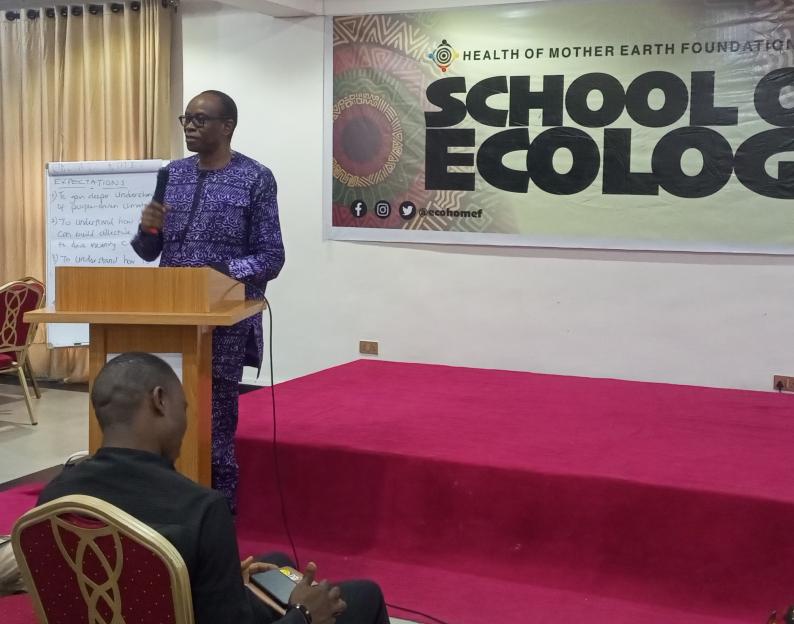
The Executive Director of HOMEF, Dr. Nnimmo Bassey, issued this call on Friday at the launch of a two-day School of Ecology workshop themed “People's Power for Climate Action,” which took place in Uyo, Akwa Ibom State. He cautioned that if young individuals do not become the driving force behind climate action, they will be shocked by the level of devastation and impact they will face in the years ahead.
He stated, “Young people must seriously engage in climate action because the future belongs to them. The climate impacts we see today will be minor in the next 10, 15, or 20 years. If they do not step up as the driving force in this call for action, they will be astonished by what they will encounter in the future.”
“This is the purpose of the School of Ecology: to raise awareness and instill in the hearts of attendees the importance of sharing these ideas with their peers.”
He encouraged them to learn from other youths around the world who have taken the lead in demanding climate justice, highlighting the courage of young activists from the Pacific Islands who approached the International Court of Justice at The Hague and received a special opinion regarding climate change. This ruling now allows anyone globally to sue governments that fail to take appropriate climate actions.
Bassey also urged the youth to seek solutions for the lack of remediation in impacted environments, particularly in the Niger Delta, questioning why some abandoned oil wells in the region have not been decommissioned.
He remarked that these sites pose significant risks to the environment, public health, and the livelihoods of local communities.
While acknowledging that many young people were not born when oil drilling began in the 1950s and the associated hazards occurred, Bassey emphasized that now is the time for them to make their voices heard by the government and relevant companies to initiate the remediation process amidst reports of divestment.
“We have seen abandoned oil wells catch fire. A few years ago, an abandoned oil well exploded in Ikot Adaudo in Akwa Ibom and was only contained after several months. We also witnessed another explosion at Santa Brabra in Bayelsa. People see these abandoned wells and mistakenly think they are harmless, but they are ticking time bombs,” he explained.
He therefore called for immediate action from the government and oil companies to take responsibility for decommissioning and rehabilitating these wells.
Ms. Betty Abah, Founder of the Centre for Children Health Education, Orientation and Protection (CEHOPEP), expressed concern that oil spills from non-decommissioned wells contaminate water sources, destroy aquatic life, and jeopardize the livelihoods of women, who predominantly rely on fishing and farming.
She further noted that women are particularly vulnerable to pollution in the Niger Delta region due to their physiology, advocating for their inclusion in the decision-making process.
Mr. Jaye Gaskiya, Director of the Centre for Transformative Governance, also spoke, noting that one challenge of environmental justice is the misconception that it is solely a Niger Delta issue.
He stated that the far-reaching effects of climate change impact all sectors of the economy, especially agriculture, regardless of the region of extractivism.
Earlier, Mfoniso Xael described the School of Ecology as a space not just for learning, but for reimagining the world through the lens of justice, solidarity, and ecological sustainability.
She added, “We are gathered here because the earth is in distress, and so are our people. We are here because the Niger Delta remains a living wound, a stark reminder of decades of exploitation, pollution, and neglect by systems that prioritize profit over people and extraction over existence.
“We will map the landscape of power and resistance, identify allies and adversaries, and co-create strategies for ecological defense, evidence gathering, and advocacy.”
Frequently Asked Questions
Why should youths take the lead in climate actions?
Youths are the future leaders and will be most affected by climate change. Engaging them now ensures they can influence positive change for their future.
What are the environmental challenges in the Niger Delta?
The Niger Delta faces numerous challenges, including pollution from oil spills, abandoned oil wells, and the adverse effects on local livelihoods, particularly for women in fishing and farming.
How can young people contribute to climate justice?
Young people can advocate for environmental policies, participate in activism, and collaborate with global movements to demand accountability from governments and corporations regarding climate action.