
"I Ignored a Minor Eye Problem as Conjunctivitis—Now, at 37, I'm Facing Blindness and Can't See My Daughter"
WHEN Kaylie Kelliher woke up feeling “hazy” last August, she thought little of it. But after suddenly struggling with street lights and car headlights over the...
 Written byEze Chidiebere Paul
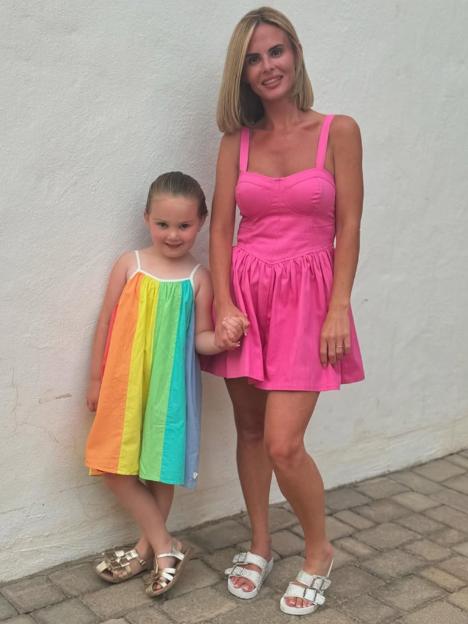
WHEN Kaylie Kelliher woke up feeling “hazy” last August, she thought little of it.
But after suddenly struggling with street lights and car headlights over the following weeks, she knew something was amiss with her eyesight.
Kaylie Kelliher, pictured with daughter Boe, initially assumed she had conjunctivitis Credit: Kennedy Newsand Media
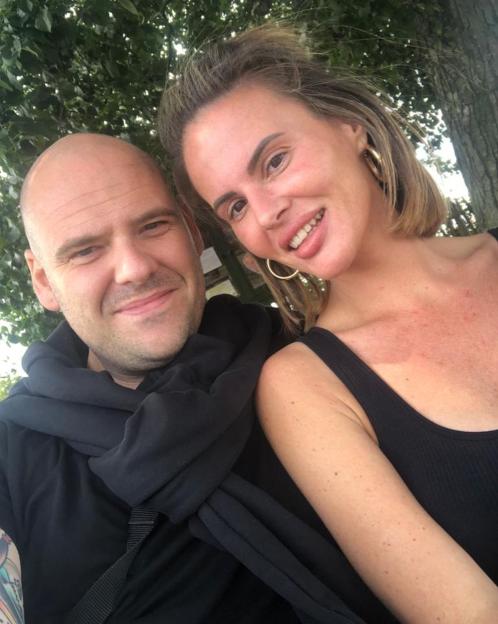 Pictured, Kaylie, 37, with husband Joe Bushnell Credit: Kennedy Newsand Media
Assuming she merely had conjunctivitis, a common condition caused by infection of allergies, the then 36-year-old who lives in Greenwich in London, was prescribed eye drops by her pharmacist.
Yet, her eyesight failed to improve on a family trip at the end of August, she booked an opticians appointment.
It was here, however, the mum-of-one was “dumbfounded” to discover the true cause of her sight issues was in fact cataracts – a condition that typically affects those aged 60 or over.
It is typically a slow-moving, progressive disease.
 After Kaylie’s eyesight failed to improve on a family trip at the end of August, she went to the opticians Credit: Kennedy Newsand Media
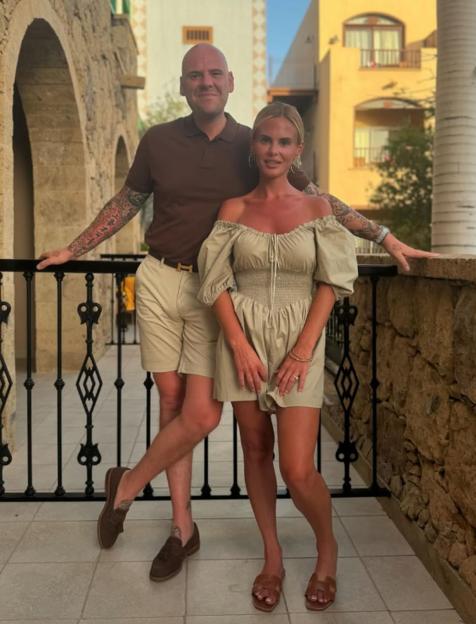 Kaylie was horrified to discover she had cataracts Credit: Kennedy Newsand Media
But, Kaylie was diagnosed with rapid onset cataracts, meaning it progresses quicker than normal and requires treatment within months.
It is not known exactly what causes cataracts, but studies suggest trauma to the eye, excessive or , a diet lacking in vitamins, certain conditions such as and radiation exposure could be contributing factors.
The only treatment that is proven to be effective for cataracts is surgery, which improves vision for most people – roughly 80 to 90 per cent.
Now, Kaylie who can’t see her daughter or even her own face in the mirror properly, is to have surgery done privately in a bid to restore her sight quickly.
Recalling her heartbreaking diagnosis, Kaylie, now 37, said: “I was absolutely dumbfounded when he [the optician] said to me I had rapid onset cataracts.
“I said to him ‘I’m too young for that’ and he was like ‘yes you are, you’re really young and it shouldn’t be happening at your age’.
“I have really elderly neighbours and I’ve heard cataracts mentioned from them.
“I’m not living a life at the minute, I’m housebound. I can’t do anything, even just silly girl things.
“[Like] being able to paint your toenails because you can’t see them, or pluck your eyebrows because I can’t even see my own face in the mirror.
“I can’t even see the telly, I can’t see anything, it’s hard because it happened so quickly. Facing the possibility of being blind makes me sad.”
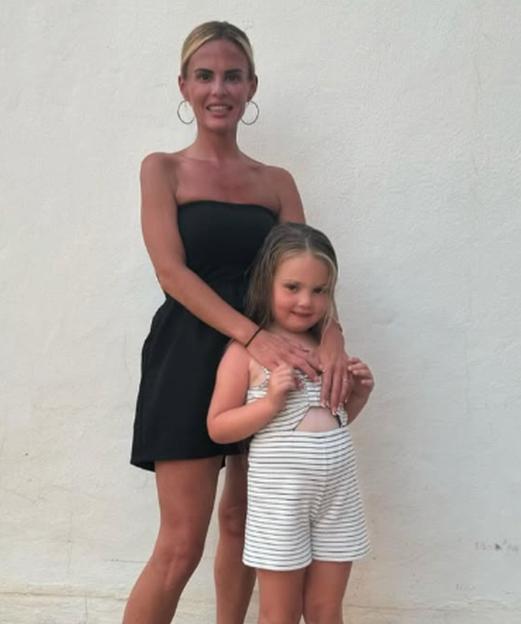 Now, Kaylie can’t see her daughter or even her own face in the mirror properly Credit: Kennedy Newsand Media
Kaylie, who is mum to seven-year-old Boe Bushnell, added: “Last I noticed that lights weren’t even lights anymore, they were becoming like halos.
“As I was at night I noticed the lights were blinding and everyone was saying ‘oh all the cars have got all those new LED lights, it’s them’, but this was just something different.
“I remember rubbing my eyes in the morning and everything seemed so hazy and milky.
“I went to the pharmacist and they thought I could have conjunctivitis so I was putting eyedrops in and it just kept getting worse.
“We went camping in August and these were the two weeks when I noticed I was really struggling to see.
“Never in a million years would I have thought it would be cataracts.”
Kaylie’s eyesight has deteriorated to -12 in her right eye and -11 in her left and without surgery she faces the possibility of going fully blind.
A minus number indicates short-sightedness, and the higher the number, the stronger prescription required, with Specsavers classing six as a large number.
Cataracts surgery is available on the .
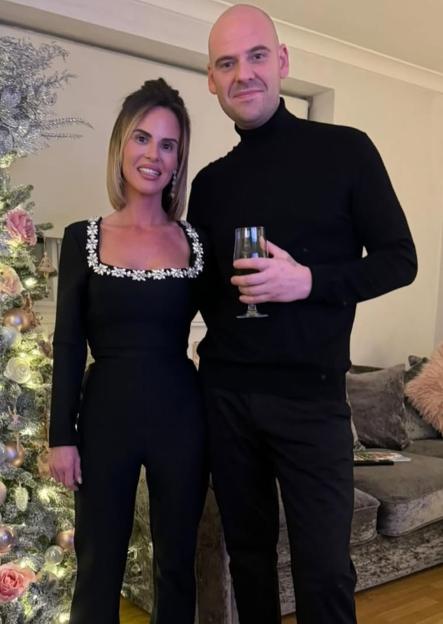 Now, Kaylie’s sister has set up a GoFundMe page to help fund private surgery Credit: Kennedy Newsand Media
But, waiting times often exceed the 18-week target, ranging from three to 12 months, with some areas exceeding a year due to high demand.
Now, Kaylie’s sister has set up a GoFundMe page to help fund private surgery, estimated at around £15,000.
To date, Kaylie’s page has raised more than £2,300.
Kaylie said: “I struggle to see her [Boe] now.”
“She knows, she rubs my eyes. I feel for her, [when] she breaks up for school I can’t take her out, I can’t get on a bus. I can’t do anything.
“I can’t see anything and it’s obviously too dangerous to take her out on my own anymore.
“There is no way we could ever even contemplate having that sort of money for private surgery. It’s just something we haven’t got.”
What is cataracts?
Cataracts are a common condition in which the lenses of the eye become progressively opaque, leading to a blurring of the vision.
They typically develop as one gets older, although they can also occur in babies and young children.
They can render simple tasks like driving extremely difficult, and in extreme cases, can eventually lead to total blindness.
It is estimated that in England and Wales, some 2.5 million people aged 65 or older have some level of visual impairment resulting from cataracts.
Cataracts can be treated with a surgical procedure, in which the patient’s original lens is removed and replaced with an artificial one.
What causes cataracts to develop?
The lens of the eye is mostly made of water and protein.
The protein is arranged in a precise way that keeps the lens clear and allows light to pass through it.
However, as we age some of this protein may clump together and start to cloud a small area of the lens.
This is a cataract, and over time, it may grow larger and cloud more of the lens, making it harder to see.
Besides advancing age, cataract risk factors include:
- Ultraviolet radiation from sunlight and other sources
- Diabetes
- Hypertension (high blood pressure)
- Obesity
- Smoking
- Prolonged use of corticosteroid medications
- Statin medicines used to reduce cholesterol
- Previous eye injury or inflammation
- Previous eye surgery
- Hormone replacement therapy
- Significant alcohol consumption
- High myopia (near-sightedness)
- Family history
Continue reading
Hour-by-hour the signs of deadly meningitis commonly mistaken for a hangover – as students warned ‘don’t delay’
A POUNDING headache, upset stomach and eyes that just can’t adjust to the light – these sound like the typical symptoms of a hangover. But they could also be t...

How 74p ‘Ozempic for booze’ pill stopped me binge-drinking & blacking out… without having to quit completely
FOR three years, Parker Jennings would wake up feeling anxious and ashamed after she had spent the previous evening binge-drinking. The 26-year-old tried everyt...

I put gym bags to the test to see which is the most practical, best-looking and comfortable
YOUR gym bag can make all the difference. As well as keeping sweaty trainers and kit separate, it needs to have somewhere safe for your laptop, water bottle an...

I tried out three hand creams and I believe one is the perfect formula
SUMMER is only just over, but given how dry my hands have felt this week, it’s already time to get the hand cream out. These are three of the best, at every pr...