Experts have expressed concern over the increasing threats posed by pollution, climate change and other human activities to water resources in Niger State, calling for urgent action to protect water bodies from further degradation.
The warning was issued during a sensitisation programme on the protection and conservation of groundwater quality organised by the Future Earth Water Science Cluster Programme in collaboration with the Federal University of Technology (FUT), Minna, and the Niger State Ministry of Water Resources.
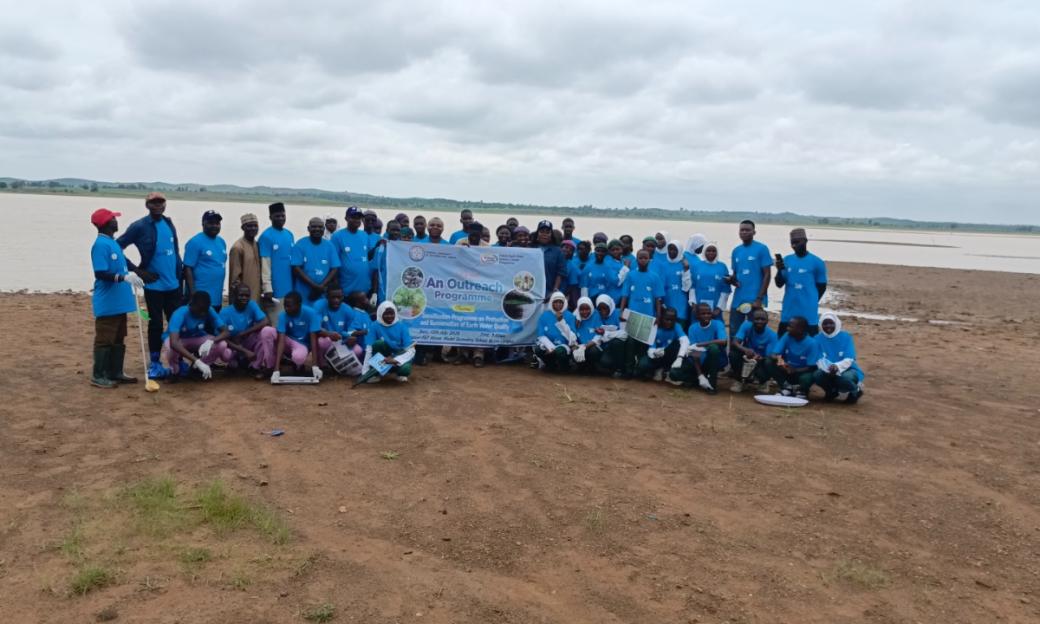
The programme, held at the Tagwai Dam site, brought together students of FUT Model School and Bosso Secondary School to promote environmental awareness and encourage responsible water conservation practices.
Speaking earlier during the event at FUT Model School in Minna, Dr Dan Hassan said that although about 71 per cent of the Earth’s surface is covered by water, only 2.5 per cent is freshwater, while less than one per cent is readily available for human use.
Dr Hassan, a retired director of Water, Sanitation and Hygiene (WASH) at the Federal Ministry of Water Resources and Sanitation (FMWRS), Abuja, warned that Nigeria is increasingly vulnerable to climate change, with flooding, drought, pollution, rising temperatures and declining groundwater posing serious threats to water resources.
According to him, pollution from open defecation, untreated sewage, industrial waste, agricultural chemicals, oil spills, mining activities and indiscriminate waste disposal continues to endanger water quality and expose communities to diseases such as cholera, typhoid fever and diarrhoea, among others.
He urged citizens to protect water sources by avoiding indiscriminate waste disposal, practising proper sanitation, harvesting rainwater and promoting environmental hygiene.
Associate Professor Victoria I. Chukwuemeka, one of the programme coordinators from the Department of Animal Biology (Hydrobiology Unit), FUT Minna, said the outreach was designed to build environmental consciousness among young people who would serve as advocates for water conservation.
She noted that urbanisation, industrialisation, population growth and pollution were placing increasing pressure on rivers and other water bodies.
Chukwuemeka identified illegal mining as one of the activities contributing to water pollution, warning that chemicals used by miners could find their way into rivers and streams through runoff.
She stressed that protecting water resources requires collective action by government, institutions and members of the public.
Also speaking, Prof. Akobundo N. Amadi of the Department of Geology, FUT Minna, said Tagwai Dam was selected for the field exercise because of its strategic importance as one of Minna’s major water sources.
He observed that climate change and human activities had contributed to siltation in the reservoir, reducing its water-holding capacity and threatening the ecosystem.
Amadi said the university was collaborating with the Ministry of Water Resources to explore scientific solutions to address the challenge.
A representative of the Niger State Ministry of Water Resources and Director of Planning, Research and Statistics, Philemon Danladi, said the government had existing laws to protect reservoirs from harmful human activities and was working to strengthen their enforcement.
He added that the state was collaborating with relevant stakeholders to safeguard water sources and improve access to safe drinking water.