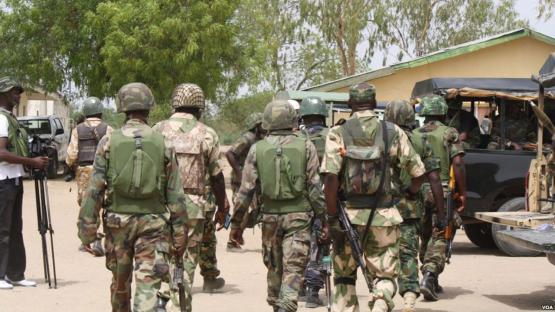
SECURITY forces have been in “24/7 operation mode for weeks” ahead of the Eurovision Grand Final amid a major terror threat.
Bomb detection , drone defences and hundreds of police officers are just part of the operation to protect the .
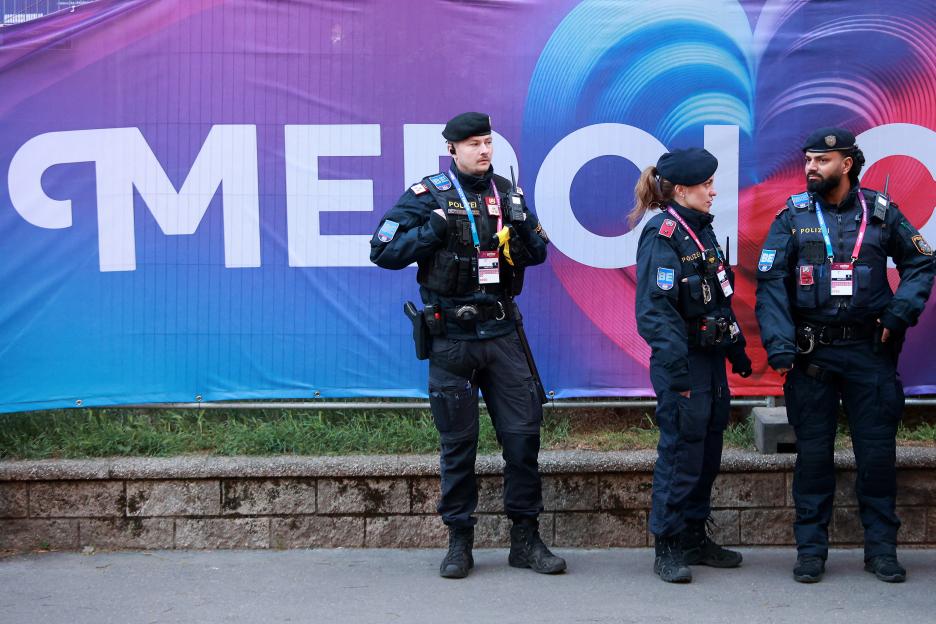
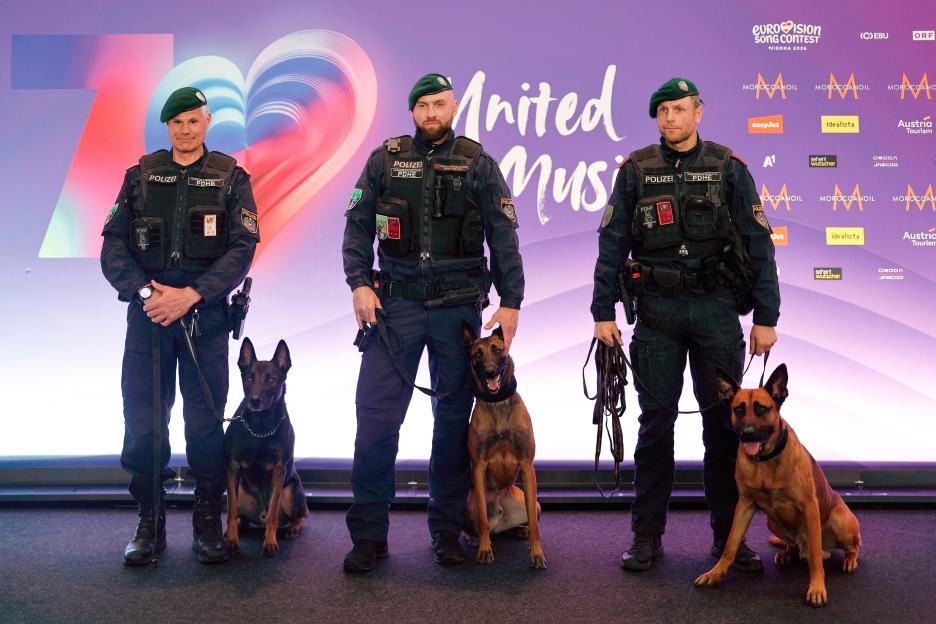 Police officers pose for a photo ahead of the Eurovision Song Contest in Vienna Credit: Reuters
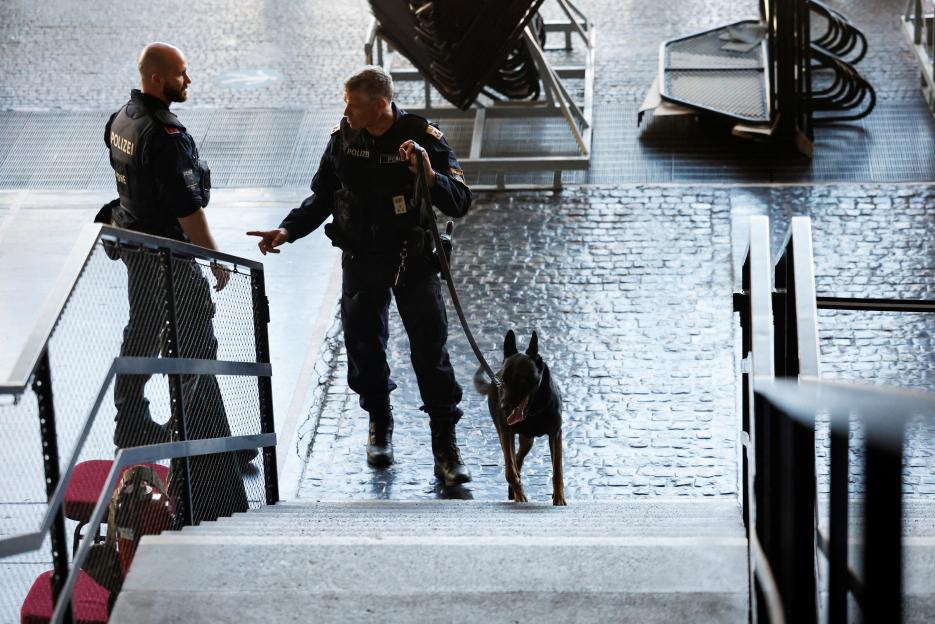 Cops prepare for the final of Eurovision in Vienna Credit: Reuters
Peter Narbe, ex-head of security for in Malmö in 2013 and 2024, lifted the lid on the operation around the “highly-exposed event”.
It has previously been described as a “dream opportunity for terrorists”.
He told The Sun that both private security and Austrian police have been training for weeks ahead of the contest.
“Preparation is key for hosting Eurovision and they have been doing their homework,” he said.
Ahead of show week, authorities have been setting up a “mini bubble” to make sure there are no threats.
Narbe explained: “Five to six weeks ahead of Eurovision, the teams have all been in an operative mode 24/7.
“They start with a mini bubble – no threats, no wrong people, and nothing hidden – and then they build outwards as a lot of trailers start arriving and stage equipment as well as merchandise.
“The bubble gets bigger and bigger until the event starts. Private security management, police, other authorities… [they are all] involved in the set up at the venue. It’s a multi agency approach.”
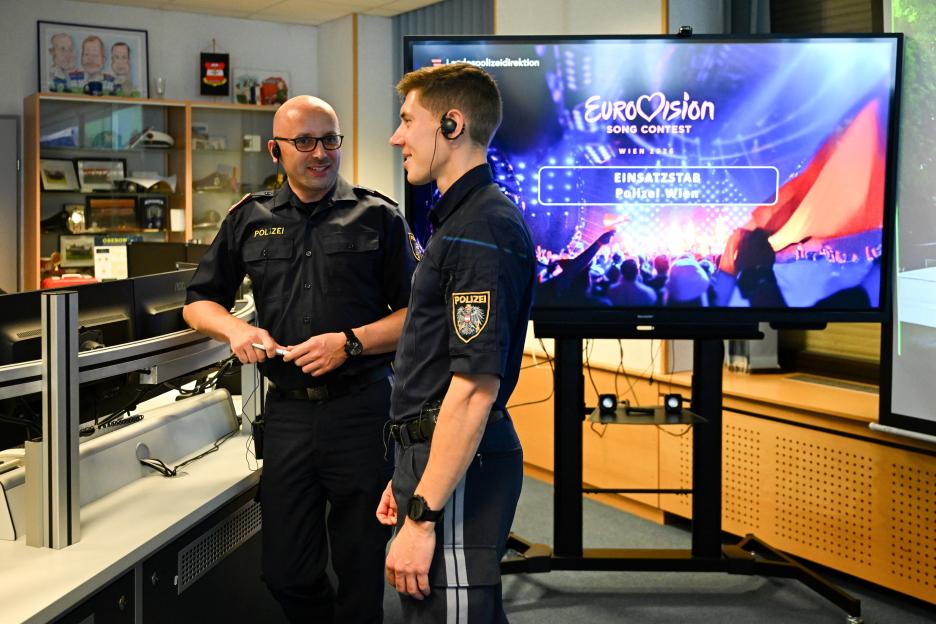 One of the police units running security for Eurovision Credit: Reuters
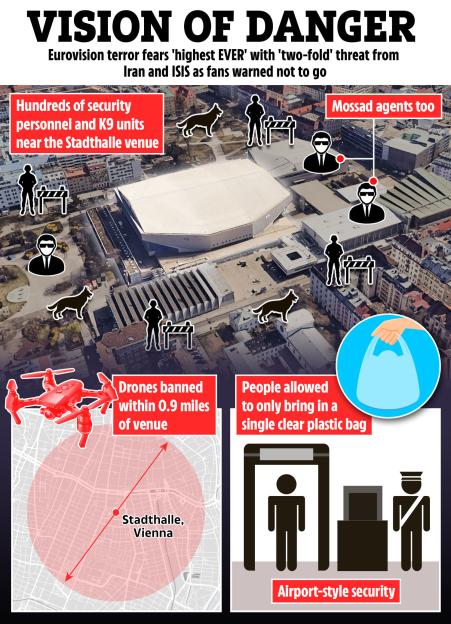
‘s police and special-forces unit, Cobra, have detailed a 250-strong, technology-heavy security operation.
As many as 15,000 security checks have been carried out as part of what Narbe called “clean venue, clean people” approach.
“It is on the same level as airport security – that is what it is all about,” Narbe said.
Everyone has undergone high levels of security checks – from the catering staff to artist entourage and sound engineers.
Narbe added: “One thing that no one really thinks that much about is that this is kind of like a training camp for the security teams, which is a good thing.
“They have been at the same location and at the same spot [for weeks] so they have had the opportunity to adjust and get better.
“By the time the Eurovision finale arrives, the organisation is on top form as they also have already had the practice from the live TV events.”
Dieter Csefan, Vice President of the State Police Directorate, said this is one of the largest security operations Austria has ever run.
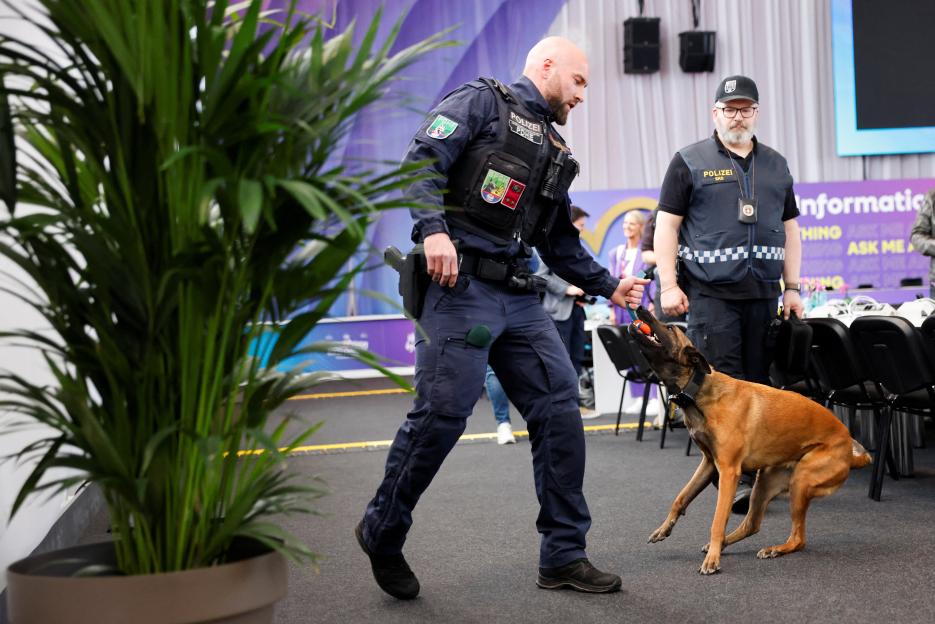 A police officer interacts with a K9 unit Credit: Reuters
 Police forces patrol before the first semi-final of the Eurovision Song Contest Credit: AFP
The general threat alert level remains at its second-highest setting, where it has been since 2023.
The is keeping a dedicated cyber task force on duty in a field office during the whole contest.
Narbe said the single biggest threat that Eurovision is facing right now is a cyber attack.
Geopolitical tensions in the Middle East and Ukraine are also looming large – so some muscle-flexing from Austria’s Cobra unit as well as other special forces will not go to waste.
Underneath Eurovision’s glitz and glam, the danger remains more real than ever.
Dr Nicolas Stockhammer, a counter-terror expert at the Danube University Krems, pointed the finger at , as well as Iran and its proxies, as the main threats – .
He told The Sun: “This kind of a massive event takes all necessary preparations… on site immediately, but also in preventing any potential terrorist plots.
“This requires international cooperation with intelligence services and enforcement bodies, which is happening.
“One major threat is potential attacks in the public viewing zones that are much more difficult to secure than the stadium site, which can be secured in a better manner.
“There is always the possibility that a terrorist attack might happen.”
Another threat identified by Narbe are the pro-Palestine protests planned for today amid Israel‘s participation.
Noam Bettan will represent Israel at the contest with the song “Michelle”.
Up to 3,000 people are expected to surround Stadthalle, the venue that is hosting the grand finale.
Stockhammer said protecting Israelis will be “one of the major challenges” for Austrian security forces.
Xenia Zauner, a senior cop overseeing the security operation, told a press conference last week: “We expect there will be blockades and disruptive actions, particularly on the day of the final, whether through authorised or unauthorised gatherings.”
Amid the planned demonstrations, Narbe admitted that Mossad agents will likely be on the ground in Vienna, accompanying the delegation from Israel.
“Each country participant has to assess their own risk, and this is a high-profile, multinational event,” the security expert added, suggesting that other nations have also deployed their own forces.
Authorities are drawing lessons from a plot that forced to cancel three concerts in Vienna last year.
More than 65,000 fans were due to attend each of the concerts at the Ernst Happel Stadium.
At the 11th hour, Austrian counter-terror officers raided a flat in Ternitz, a small town south of Vienna, where they found detonators, electronic ignition devices and machetes.
A 19-year-old man who had pledged allegiance to on Telegram was arrested and accused of plotting a mass attack at the stadium, intended to kill “tens of thousands of people”.
Stockhammer said one of the suspects was allegedly working inside the stadium as part of a catering company which gave access to sensitive areas.
In late April, and being part of a terrorist group.
He went on trial with another 21-year-old man, named as Arda K, who is accused of being part of an Islamic State cell with him.
The Eurovision venue itself is expected to be easier to protect as it is smaller and more contained than the stadium used for the Swift concerts.
But Stockhammer warned that security forces must prepare for a wide range of threats.