A TRAGIC estate agent spent £500-a-month on incontinence pads after becoming addicted to ketamine, an inquest heard.
Isabelle Sapherson-Moralee, known as Izzy, died after her body shut down having spent five years taking the class B drug.
 Isabelle Sapherson-Moralee died from ketamine abuse Credit: BNPS
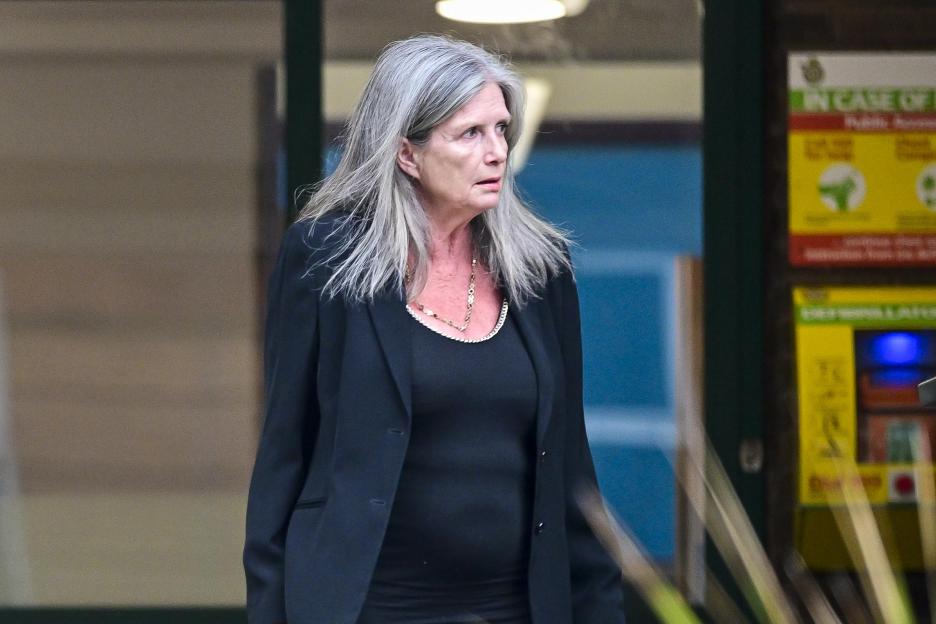 Her mum Ann told an inquest of her harrowing battle to save her daughter Credit: BNPS
Her devastated mum Ann Moralee battled for 18 months to get help for Izzy and tried warning health officials that her daughter would die from it.
An inquest heard Izzy suffered from chronic pain and a damaged bladder due to her addiction.
Two days before she died, she “went home to die’ after she discharged herself from hospital.
While being cared for by her mum, Ann begged her daughter to let her call her an ambulance.
 Ann started taking the drug regularly during the Covid lockdown in 2020 Credit: Facebook
 The estate agent had to stop working about six months before her death Credit: Facebook
She told the inquest: “I kept asking her, please let me phone an ambulance but she said ‘no more hospitals mum, I can’t do it anymore’.
“She knew she was dying that last 48 hours.
“She died 36 hours after she got home. She was freezing cold, shallow breathing. I checked on her and she was cold.”
Ann, a flight attendant and former nurse, gave her daughter CPR in a heartbreaking bid to save her.
 Izzy spent £500 a month on incontinence pads Credit: Facebook
 THE TOLL 'K' TAKES ON YOUR BODY
KETAMINE can lead to death by putting pressure on the heart and respiratory system.
But its other effects on the body, which are often irreversible, are horrifying, too.
“Ketamine bladder syndrome is one of the worst symptoms,” Dr Catherine Carney, an addiction specialist at Delamere , .
This is where the breakdown of ketamine in the body causes inflammation in the bladder wall.
It leaves people unable to hold urine and passing chunks of their bladder tissue.
Some users face the prospect of having their bladders removed entirely.
Dr Carney explains: “The lining of the bladder can shrink over time and be extremely painful for those experiencing it.
“This can often lead to lower abdominal pain and pain when passing urine, as well as bleeding.
“It’s usually what has forced people to get help because they can’t tolerate it any more.
“We’ve had young men in agony, wetting the bed.
“Their whole life is focused on where there’s a toilet because they can only hold urine for ten minutes.
“For a teenager or someone in their early 20s, that’s absolutely life-changing.
“In some cases, the bladder damage progresses to the kidneys and people get kidney failure, too.
“This is developing in people who have been using for two years, so it is relatively quick.”
Dr Carney adds that the urine samples of new guests checking into the clinic are often just a “pot of blood”.
This is followed by weeks of agony coming off the drug. An irony of ketamine use is people tend to take more and more to numb the pain of the side-effects it causes.
Dr Carney says: “There’s nothing that we can give which is as strong as a medical anaesthetic (the ketamine). We can use codeine-based products or anti-inflammatories.
“Some antidepressants help at night, but the pain is hard to manage in the early days.
“Most people that come to us, the bladder will improve to the point that they don’t need to have it removed.
“But once you’ve got a bladder that has shrunk to the size of 70ml, that’s never getting better.”
She added: “I have saved a lot of lives in my career, both as a nurse and flight attendant, but ultimately I couldn’t save my daughter.”
Izzy, who worked as an estate agent, started taking the drug regularly during the Covid lockdown in 2020 when she moved in with her boyfriend.
Ann, from Wimborne, , said she did not discover her daughter had been using ketamine until the end of 2023 when it had gotten “out of control and she couldn’t hide it anymore”.
The drug use had damaged Izzy’s bladder and caused her to become incontinent about a year before she died.
Her mother said it was so bad she spent £500 a month on incontinence pads and Izzy had to stop working about six months before her death.
Ann told the inquest she felt health officials could have done more to help her daughter and had “missed opportunities.”
After a bad experience with a urologist at Salisbury District Hospital who Ann claimed was “vile” to Izzy, she said her daughter no longer trusted doctors.
She added: “She was just seen as a ketamine addict and everything else was ignored, especially her back pain.
“I spent up to £500 a month on incontinence pads, we asked for help from the bladder and bowel people but they discharged her, as did the weight-loss team who said she didn’t have an eating disorder. Then she really just gave up.”
Ann said she tried to get her daughter into rehab using her private medical insurance and looked at going to America for treatment.
She told the court there was a “last chance” to save her daughter when she was arrested for suspected ketamine possession.
Despite Izzy struggling to walk and becoming disorientated, she was not sectioned under the Act – a decision Ann did not agree with.
Izzy was admitted to hospital in March but even then and despite her poor health she was still able to get hold of and take ketamine.
A month later, she was admitted to A&E before discharging herself.
Ann said: “I kept asking Izzy ‘please let me phone the ambulance’. She said ‘no more hospitals mum, I just want to be at home with you, I can’t do it anymore’.
“So I made her hot water bottles, made her some French toast, she didn’t eat much.”
When the family’s lawyer asked if Izzy wanted to get better, Ann replied: “Yes, she said I’m going to get better, I’m going to do a psychology course then I want to help other children like me.
“Nobody should have to go through what I have been through. Her goal was to get better.”
Izzy’s cause of death was given as respiratory due to combined severe morphine and gabapentin toxicity.
Both pain showed higher than normal therapeutic levels in her blood and the gabapentin would have exacerbated the toxic effects of the morphine.
The post mortem examination also found she had biliary , localised sepsis in the liver, which may have been a contributing factor but did not cause her death.
The inquest continues.