
Delta Traditional Council in Turmoil as Monarchs and Chiefs Clash Over Disputes
A supremacy battle has erupted in the Delta State Traditional Council between the Forum of Urhobo Kings, also known as Ukoko r’ivie, (FUK), and the Traditional...
 Written byEze Chidiebere Paul
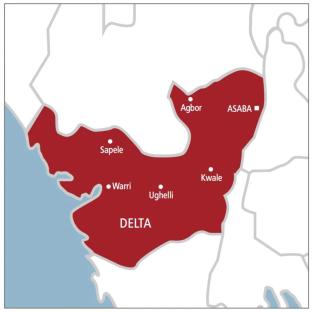
Table of Contents
- Supremacy Battle in the Delta State Traditional Council
- FUK's Ban on Parallel Chieftaincy Associations
- TCULA's Response to the Ban
- Legal Implications of the Ban
- Comments from Chief Omene
A power struggle has emerged within the Delta State Traditional Council between the Forum of Urhobo Kings, also referred to as Ukoko r’ivie (FUK), and the Traditional Chiefs of Urhobo Land Association (TCULA), regarding the presence of rival chieftaincy associations.
FUK has imposed a prohibition on what it terms “parallel chieftaincy associations” in Urhobo land, while TCULA argues that this prohibition is invalid and unconstitutional.
FUK, led by His Royal Majesty Dr. Emmanuel Sideso, Abe I, the Ovie of Uvwie Kingdom, through its spokesperson, His Royal Majesty Obukowho Monday Whiskey, Udurhie I, the Ovie of Idjerhe Kingdom, has asserted that no association known as the Traditional Chiefs of Urhobo Land Association exists.
He emphasized that no Urhobo chief is allowed to join or establish a chieftaincy association outside of his kingdom.
Conversely, the National President of TCULA, Chief Omene, characterized the prohibition as unconstitutional and unenforceable, asserting that only the government is empowered to dissolve a legally registered association.
He cautioned that TCULA would not hesitate to pursue legal action against any traditional ruler attempting to obstruct its operations.
According to him, TCULA is properly registered with the Corporate Affairs Commission (CAC) and functions within the legal framework.
“The association will persist. Only the government has the authority to dissolve an association. TCULA is registered, and the government is aware of it. They do not have the right to disband it,” Omene stated.
“Nigeria has a constitution, which is binding on everyone. One cannot simply wake up and take actions that contravene the constitution.
“The right to associate freely is guaranteed. If they believe they possess such powers, let them attempt it. We will take them to court,” he asserted.
Chief Omene further contended that traditional rulers lack the authority to revoke chiefs' titles, noting that chieftaincy matters are governed by the state government.
“My king does not have the right to disrobe me. Once a staff of office is bestowed, it cannot be withdrawn arbitrarily. The same applies to chiefs. When a kingdom confers a chieftaincy title, the state government issues a certificate. Only the state government can rescind such recognition,” he clarified.
Expressing his discontent over FUK’s directive, Omene accused the Urhobo kings of selectively intervening in significant issues affecting the Urhobo people.
“When the Urhobo Progress Union (UPU) was being established, these same kings opposed it. During the Okuama crisis, did they issue a statement? When Urhobos were killed in Warri, did they voice any concern? During the INEC delineation in Warri, did they say anything? No,” he claimed.
Despite the resistance from FUK, the TCULA leader expressed confidence in the steadfastness of his members.
“Our members are resolute. They are not swayed by this action,” he affirmed.
He also suggested that the traditional rulers were reluctant to address issues involving neighboring ethnic groups.
“They fear the Itsekiri and Ijaw kings,” Omene added.
FAQ
What is the conflict between FUK and TCULA about?
The conflict centers on the existence of parallel chieftaincy associations, with FUK banning such associations and TCULA claiming the ban is unconstitutional.
What authority does TCULA claim regarding its status?
TCULA asserts that it is legally registered with the Corporate Affairs Commission (CAC) and operates within the law, thus only the government can dissolve it.
What did Chief Omene say about the rights of traditional rulers?
Chief Omene stated that traditional rulers do not have the authority to revoke chiefs' titles, as chieftaincy matters are regulated by the state government.
Continue reading
Fubara mourns former SSS DG Horsfall, describes death as major loss to Nigeria
Rivers State Governor, Siminalayi Fubara, has described the death of former Director-General of the State Security Service, SSS, Chief Albert K. Horsfall, as a...
No media spectacle can erase Alia’s achievements in Benue – Numbeve
The State Coordinator of the Rural Access and Agricultural Marketing Project, RAAMP, Benue State, Mr Stephen Numbeve, has said no amount of media spectacle, pol...

Nasarawa 2027: Zoning faces major test as Wadada, Ombugadu, others battle to succeed Sule
As the race to succeed Governor Abdullahi Sule gathers momentum, Nasarawa State is approaching an election that could determine not only its next governor but...
Rivers sets up committee for Nigeria’s 66th independence anniversary
The Rivers State Government has begun preparations for Nigeria’s 66th Independence Anniversary with the inauguration of a Central Planning Committee to coordina...