
Rising Alarm Over Islamic Police Operations in Northern Nigeria
Growing concerns are emerging across northern Nigeria over what many residents have described as the increasingly harsh enforcement of Hisbah laws, with allegat...
 Written byEze Chidiebere Paul
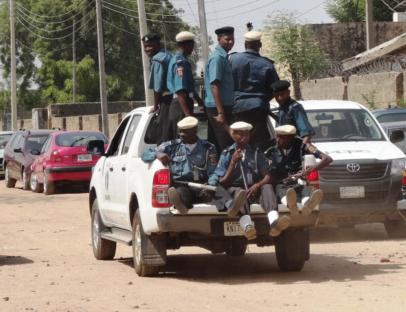
Growing concerns are emerging across northern Nigeria over what many residents have described as the increasingly harsh enforcement of Hisbah laws, with allegations that some operatives of the Islamic moral police have exceeded their legal mandate.
The Hisbah police was formally established as a state-backed agency in 2003 under Governor Malam Ibrahim Shekarau to enforce Shari’a law and regulate public morality.
Hisbah institutions operate mainly in states that have adopted aspects of Sharia law in their legal systems.
These states include Kano, Katsina, Zamfara, Sokoto, Jigawa, Kebbi, Bauchi, Yobe, Niger, Gombe and parts of Borno.
While the primary mandate of Hisbah is to promote moral conduct and support social order, critics argue that the manner of enforcement in some states has created fear, tension and resentment among residents, including Muslims and non-Muslims alike.
However, in recent months, reports of arbitrary arrests, harassment, destruction of property and restrictions on personal freedoms have intensified, raising questions about the balance between religious morality, constitutional rights and Nigeria’s pluralistic identity.
DAILY POST gathered that complaints against Hisbah operatives have increased in several northern states, with residents accusing them of acting with excessive force and operating with little accountability.
In Kano State, recent incidents involving the destruction of alcoholic beverages, forceful raids on private gatherings and arrests of young people over alleged immoral conduct have reignited debate about the limits of Hisbah authority.
In early February 2021, the Kano State Hisbah Corps (Islamic police) arrested a young barber, Elijah Ode, from Benue State for allegedly giving customers haircuts deemed blasphemous or offensive to Islam.
Elijah, a Christian, was first arrested on January 15, 2021, released, and then re-arrested on January 27, 2021, after two of his customers were caught sporting the styles. He was subsequently detained for more than seven days and remanded in prison.
His arrest sparked outrage among many Nigerians, with activists and some politicians questioning the role of the Hisbah in a secular state and their impact on non-Muslims residing in the northern region.
His arrest was one of many troubling incidents involving the infringement of the fundamental rights of non-Muslims by the Islamic corps.
In December 2025, Hisbah officials in Kano reportedly stormed several hotels and event centres during late-night operations, arresting youths accused of violating moral codes and seizing items considered prohibited under Islamic law.
The raids drew criticism from residents who described the operations as excessive and humiliating.
Similarly, in early January 2026, Hisbah operatives in Zamfara State were accused of assaulting a trader during a raid on a market in Gusau over alleged sale of alcoholic drinks.
The incident sparked outrage on social media, with residents accusing the agency of brutality.
In Katsina State, residents of Funtua also complained after Hisbah officials reportedly destroyed goods belonging to shop owners accused of selling items considered un-Islamic, an action that traders described as “economic punishment without due process.”
A resident of Kano, who spoke to DAILY POST on condition of anonymity, said, “Hisbah officers sometimes act like they are above the law. They invade homes, seize property and humiliate people who are not Muslims without proper legal process.”
He described the situation as “a form of intimidation disguised as religious enforcement,” adding that “people now live in fear of being arrested over personal choices that should not be criminalised.”
Legal experts say the actions of some Hisbah operatives raise serious constitutional concerns, noting that Nigeria’s Constitution guarantees fundamental rights, including freedom of religion, movement and personal liberty.
DAILY POST reports that tensions surrounding Hisbah operations are not new.
Since the early 2000s, when several northern states began implementing Sharia law, debates have persisted over the scope and legality of Hisbah activities.
Human rights groups say such incidents reflect a pattern of overreach. Amnesty International has previously warned that moral policing in Nigeria must not undermine human rights and the rule of law.
Civil society organisations have also raised alarm.
In 2020, the Human Rights Writers Association of Nigeria, HURIWA, had called on the Nigerian Government to immediately disband the Hisbah police operating in the North.
According to the organisation, Hisbah was an illegal group that violates the constitutional rights of Nigerians in the North, adding that “religious values must be promoted through persuasion and education, not coercion, violence or destruction of property.”
A spokesperson for a northern-based human rights group, Ibrahim Lawal, said that “the problem is not the existence of Hisbah, but the lack of clear boundaries and accountability mechanisms.”
“There must be oversight. Without it, Hisbah risks becoming an instrument of oppression rather than moral guidance,” Lawal added.
However, supporters of Hisbah argue that the institution plays a vital role in preserving moral values and social order in predominantly Muslim societies.
A Kano-based Islamic scholar, Sheikh Ahmad Sani, said Hisbah was established to protect society from moral decay but must operate within the law.
“Hisbah is meant to guide, not to oppress. Any abuse by individuals should not be used to condemn the entire system, but rather to reform it,” he said.
DAILY POST gathered that some state governments are beginning to acknowledge the need for reforms.
In recent months, discussions have emerged around strengthening regulatory frameworks, training Hisbah personnel on human rights and improving coordination with conventional law enforcement agencies.
Analysts said the controversy over Hisbah enforcement reflects a broader challenge facing Nigeria: how to reconcile religious laws with democratic principles in a multi-ethnic and multi-religious society.
Continue reading
NSUBEB chairman tasks communities to protect completed school projects
The Executive Chairman of the Niger State Universal Basic Education Board, NSUBEB, Dr. Ibrahim A. Liman, has warned communities benefiting from government-funde...
Do not sacrifice professionalism for mediocrity – OGIRS boss charges CITN members
Members of the Chartered Institute of Taxation of Nigeria, CITN, have been charged not to sacrifice professionalism for mediocrity in order to keep upholding th...
Curfew imposed in three Taraba communities over communal unrest
The chairman of Sardauna Local Government Council in Taraba State, Mohammed J. Umar, has declared a 24-hour curfew in Mbamnga and two neighbouring communities f...
Brit soldier, 40, killed in crash in Ukraine pictured as heartbreaking tributes paid to ‘exceptional leader’
THE UK armed forces member who died in Ukraine this weekend has been named by the Ministry of Defence as 40-year-old Major Paul Wilks. Tributes flooded in to th...