ACCORDING to a new study Brits start taking their health seriously at the age of 38.
The poll of 2,000 middle-aged respondents, aged 40-65, shows putting on weight (27 per cent), feeling generally unfit (24 per cent) and reaching a milestone (22 per cent) are the most common signals that prompt us to start looking after ourselves.
 Dr Reem Hasan said many symptoms experienced during midlife are ‘easy to dismiss’
 Dr Hasan is the Chief Medical Officer at Vista Health – a private diagnostics providerCredit: Supplied
And other health prompts include a of family illness (20 per cent), an actual diagnosis (20 per cent) and the death of a family member (17 per cent).
However, more than three quarters (76 per cent) aren’t sure which symptoms are worth checking, with over half (54 per cent) admitting they initially ignored warning signs.
The study, which was commissioned by a leading UK private diagnostics provider Vista Health as part of its Signs of Clarity campaign, went on to find over half (51 per cent) of respondents would like greater peace of mind when it comes to their .
With two in three (65 per cent) admitting to checking their symptoms on rather than seeking professional help.
Dr Reem Hasan, NHS and Chief Medical Officer at Vista Health said: “Many of the symptoms’ people experience in midlife are easy to dismiss or explain away, and our research shows just how common that is.
“While midlife marks a pivotal moment when people begin to take their health more seriously, too many still struggle to recognise which symptoms truly need attention.
“At the same time, demand for private diagnostic scans and screenings is rising, as more people seek clarity and reassurance when symptoms feel new, persistent or hard to explain.
“While not every symptom is a sign of something serious, our are very good at sending early warning signals.
“The problem is, we have become very good at ignoring them.
“Midlife is an opportunity to tune into your body, ask the right questions and take control of your health with confidence rather than fear.
“Just as warning signs on the road are there to protect us, the warning signs from our bodies deserve the same attention .
“These signals are there to slow us down, prompt a check-in and help us recognise when it’s time to seek advice.
“Diagnostic scans and health checks can play an important role at this stage of life.
“They offer clarity, reassurance and a better understanding of what’s happening beneath the surface, empowering people to make informed decisions about their health, rather than living with uncertainty.”
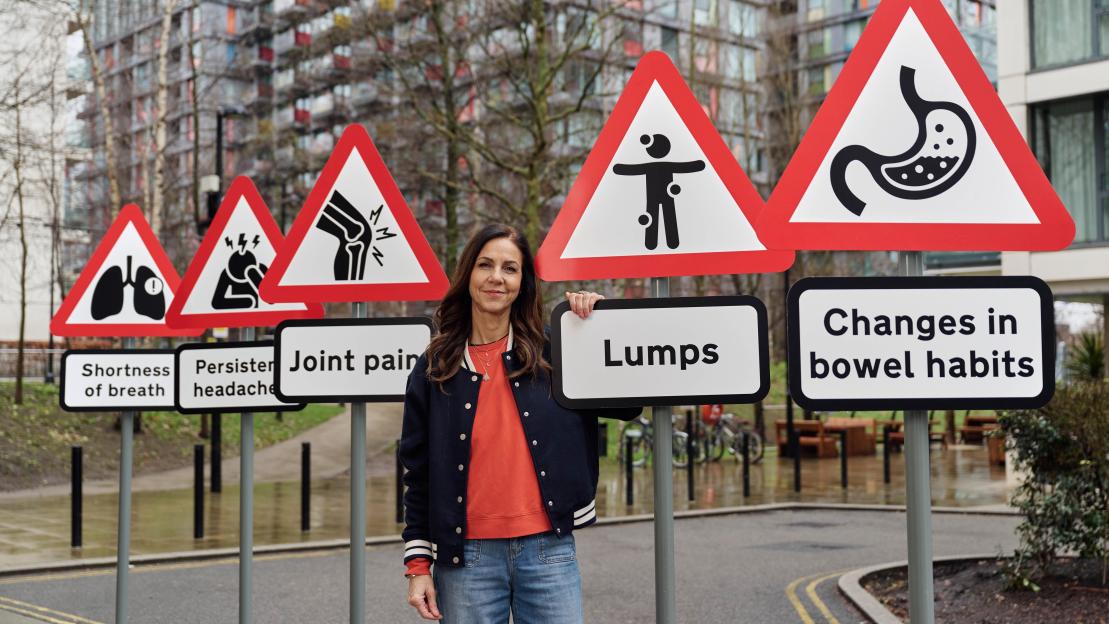
The research went on to find that two thirds (65 per cent) of midlife are more likely to pay attention to road signs than to new or unusual signals from their own bodies – and as a result Vista Health has created a series of striking road-style warning signs for midlifers to be aware of.
The campaign is supported by Julia Bradbury, who has shared her experience of the importance of listening to your body in midlife, following her diagnosis and, more recently, the discovery of a brain cyst.
Julia said: “You know your body better than anyone, and paying attention to the signs it gives you, especially new or persistent changes, is one of the most powerful ways to protect your health.
“For me, noticing those changes led to critical diagnoses.
“Midlife is a turning point, when you can start to understand your body better and to feel confident about seeking advice when something doesn’t feel right.
“This isn’t about a health crisis; it’s about using those signs to take control of your health now and for the years to come.”
TOP 10 SIGNALS TO TAKE CONTROL OF MIDLIFE HEALTH
Putting on weight – 27%
Feeling unfit – 24.3%
Reaching a milestone birthday – 22.4%
Family history – 20.3%
A diagnosis – 20.1%
Death of a family member – 17%
A new symptom – 13.7%
A recurring symptom – 12.2%
Becoming a parent – 9.3%
Financial pressures – 6.4%
 Putting on weight was the most common signal for someone to control their midlife healthCredit: mediaphotos