It’s exactly six years and two months since the administration of Nigeria’s late former President Muhammadu Buhari banned the supply of petroleum products to filling stations located within 20 kilometers of Nigeria’s land borders.
The ban pronounced in November 2019 was intended to combat the smuggling of subsidized petroleum products to neighbouring countries and stop terrorists and bandits who were getting fuel supplies from filling stations along national borders.
DAILY POST gathered that with the ban in place, communities throughout 15 states have been negatively impacted, forcing locals to either drive long distances or pay more to black marketers to buy the product for their daily needs.
In Ogun State, the fuel ban has continued to cripple businesses and impacted border communities in Ipokia, Imeko Afon, Yewa North formerly known as Egbado North and Yewa South formerly Egbado South local government area of the state.
However, on March 18, 2020, the federal government partially lifted the ban by approving waivers for 66 filling stations in border communities to resume lifting and supplying petroleum products.
This decision, managed by the Nigeria Customs Service (NCS) and the National Security Adviser (NSA), contained in a circular titled (NCS/ENF/ABJ/058/S. 24) was intended to ease severe hardship faced by residents in border communities who were previously forced to travel long distances for fuel.
The 66 stations are in various border areas, including those in Cross River/Akwa Ibom, Kano/Jigawa, Katsina, Kebbi, Kwara, and Ogun states.
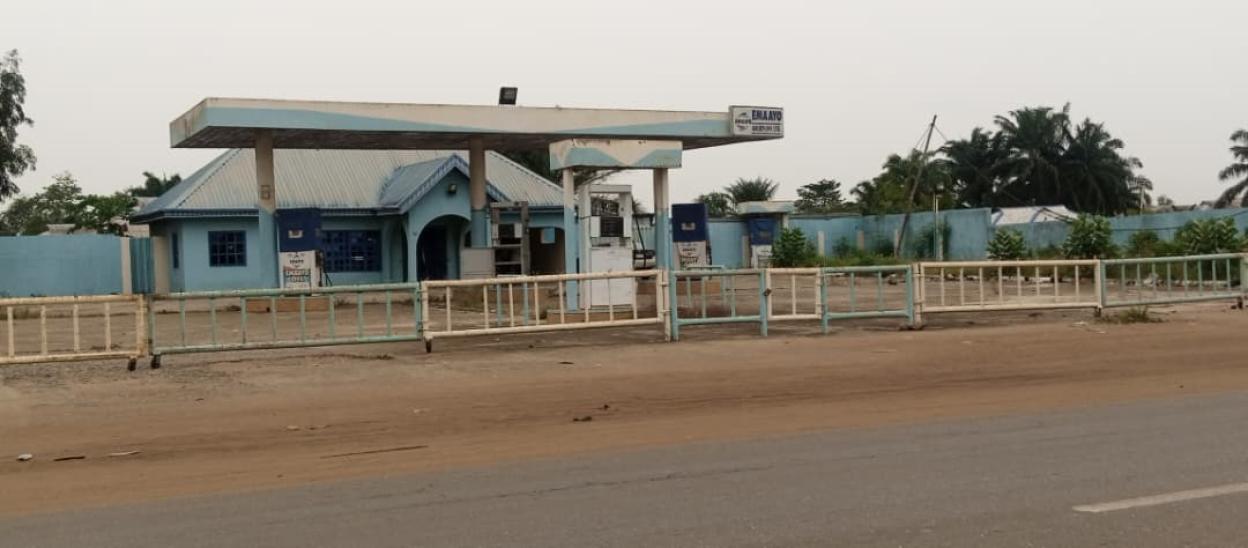
Despite this waiver, residents in Ogun border communities still groan over the hardship caused by the ban.
According to them, the fuel crisis in 2024 drained and left a lasting effect on them as black marketers sold at exorbitant prices.
The CDA Chairman, Iwoye-Ketu, Imeko Afon local government, Ahmed Ismaila disclosed that during the fuel crisis, the cost of transportation tripled, and one litre was sold for N2,000 in the black-market.
He recounted, “It was a serious case here. One litre was sold for N2,000 here. We can’t even buy it at the fueling stations, it’s only through the ‘black market.’
“From Iwoye to Imeko, I paid N3,000 for transportation. The same distance used to be N700 – N800. Only one filling station was selling and customers besieged the station.”
Meanwhile, our correspondent gathered that a litre was sold for N1,300 to N1,400 in Idiroko and Ijofin communities.
It was learnt that the black marketers travel down to Owode and Ota to purchase petrol and transport it back to Idiroko to re-sell.
Ogun state gets additional waiver
In May 2025, the Federal Government of Nigeria granted waivers to five additional petrol stations in Ogun State to resume fuel sales, bringing relief to the border communities- two in Imeko and one each in Ilara, Oja Odan, and Ohunbe communities, all in Yewa North and Imeko/Afon Local Government Areas of the state.
According to the lawmaker representing the Yewa North/Imeko-Afon federal constituency in the House of Representatives, Gboyega Nasir Isiaka, the waivers were granted after sustained pressure from major stakeholders led by him.
Findings revealed that no fewer than 161 filling stations fall within the restricted border communities. However, Isiaka in a statement by his media aide, Femi Peters, said the waiver is a step towards economic justice.
He said, “This represents more than just a policy shift; it is a restoration of dignity, a rekindling of hope, and a step towards economic justice.
“This is just the beginning, our voice will not waver, our resolve remains firm. The well-being of our people is not negotiable.”
Residents of those areas expressed joy over the development, describing it as a great relief, saying they now purchase fuel at the rate of N800-N900 per litre from filling stations and N1,200 from black markets.
Ismaila, however, told DAILY POST that some communities like Gbayi were still affected, and appealed to the federal government to totally lift the ban to ease the socioeconomic activities of the residents.
“They are now selling fuel here at Iwoye. They gave waivers to about two filling stations, but ordinarily, we have about five filling stations here.
“So, the price has dropped to N800 – N900 per litre but that doesn’t stop black marketers. Most times when there is no fuel at these stations, black marketers who have hoarded the product will then have field days and sale for N1,200 per litre,” he said.
“Some communities like Gbayi are still affected. Our demand is that the government should finally lift the ban and allow other filling stations to start supplying fuel to the border communities. This will ease pressure on the socioeconomic activities of the residents,” he begged.
Some people sleep at fuel stations, spend N5,000 on transportation – Resident cries out
Meanwhile, a resident of Ijofin in Ipokia local government area of the state, Mr. Abdulganiyu Babatunde, maintained that the waiver granted so far is not enough to satisfy the needs of residents.
Abdulquadri lamented that some of the filling stations personally chose when to sell and when not to sell, causing some residents to sleep at the fuel station to enable them to buy on time the following day.
“They are forming a kind of monopoly, or should I call it ‘oligopoly’, whereby they make decisions by themselves, so they decide when to sell and when not to sell, they can start selling petrol in the morning by 12 p.m. They’ll just close, telling people they don’t want to sell anymore.
“Some people sleep at the fuel station ahead of the next day so they can buy fuel.
“We have 12 wards in our local government, and the waiver did not get to all of it. I’m from Ijofin, there’s no filling station working there, so we must travel to other places to get fuel,” he told DAILY POST.
According to him, the cost of transportation also skyrocketed, disclosing that some residents travel down to Idiroko from Idi-Oke and spend not less than N5,000 on transportation.
“It’s not that easy for residents of Idi-Oke, even the transport to Idiroko, if you see someone who has the mercy of God, you’ll still spend N5,000 just to go and get fuel.
“You can see how difficult it is. Car and bike owners have no option than to go there, and for the commercial bike owners, the consumers are at the receiving end of it because they charge high. A place where bikes take N100, N200, now we cannot pay less than 500 Naira,” he lamented.
Monarch, residents call for lifting of ban
The Eselu of Eselu Kingdom in Yewa North Local Government Area of the State, Oba Akintunde Akinyemi, during a press conference held to mark his last birthday celebration called on President Bola Tinubu to lift ban on fuel restrictions to the border communities.
The first Class Oba queried why the government was yet to lift the ban, disclosing that despite his effort made to engage authorities, it yielded little result.
He asked for more responsible governance to address the suffering faced by the residents, especially those in the border area.
“They believe that petrol is being smuggled to Benin, Niger Republic and the rest, and that is affecting the economy.
“But that was initially, when there was subsidized fuel. Now, if the government says it has taken away subsidies, and we’re buying at a high rate, why is the border still closed?” He queried.
Similarly, Babatunde also questioned why the federal government was yet to lift the ban since the subsidy paid for petrol had been removed.
He noted that the residents in border areas should be allowed to resume their business, insisting that the ban had led to an increase in stealing, burglary among other social vices.
“At times the government thinks they’re solving a problem not knowing that they’re creating another one, because at the end of the day we can’t sleep with our two eyes closed.
“Initially when they started the ban it wasn’t that easy, even till now we’re still facing some of it.
“We hear issues of stolen goats, burglaries of shops, among others because these people(smugglers) have nowhere to source for their daily bread again,” he added.
Also, the CDA Chairman in Iwoye-Ketu, disclosed that once the two stations currently operating in his area are sold out, it takes about one to two weeks before tankers arrive to supply them fuel again.
“So, it’s still affecting us,” he stressed.
“Imagine if all the filing stations were operational, it would be hard for all the filling stations in the community to be out of stock at the same time. So, the government should please lift the ban. It’s long overdue,” he appealed.
DAILY POST reports that despite the ban which was aimed to curb the smuggling of petrol, the Nigeria Customs Service (NC) in Ogun State seized over 190,741 liters of fuel in the last one year.
Those seizures were made in various border communities in the state and neighboring towns.
In May, 2025, the Comptroller-General of the Nigeria Customs Service, Bashir Adeniyi, said Operation Whirlwind intercepted 39,425 litres of petrol worth N39.4 million within Lagos-Ogun axis.
In the month of June, 39,425 liters of Premium Motor Spirit (PMS) were seized with a duty-paid value of N39m, while in July, 35,535 liters of PMS with a duty-paid value of N58.36 million were intercepted at notorious fuel-smuggling flashpoints in Ajilete, Ilaro, Badagry, Owode, Eree and Obada Imeko.
Also in the month of October, 49,500 liters were intercepted within Lagos and Ogun Axis with a duty-paid value of N80,452,000.
Allow residents enjoy their right to freedom of equality – CDHR
Reacting to the situation, the National President of the Committee for the Defense for Human Right (CDHR), Comrade Yinka Folarin implored the federal government to allow residents in border communities enjoy their socio-economic right to an adequate standard of living, which includes access to essential commodities like food, water, shelter, electricity, and healthcare.
He stated that “we live in a country where we battle with electricity supply and the only alternative beside solar power is to make use of generators,” stressing that the inability to get access to fuel is a deprivation of human rights.
The Nigerian Constitution guarantees equal rights to essential commodities, particularly in Chapter II, which outlines the Fundamental Objectives and Directive Principles of State Policy.
DAILY POST reports that the Section 17(3) emphasizes that every citizen has the opportunity to secure adequate means of livelihood and suitable employment without discrimination, which can be interpreted to include access to essential commodities like food, water, electricity, shelter, and healthcare.
According to Article 22 of the African Charter on Human and Peoples’ Rights (ACHPR), ratified by Nigeria, it states that all have the right to their economic, social, and cultural development, with due regard to their freedom and identity, and in equal enjoyment of the common heritage of mankind.
The human right activist noted that lifting of the ban is long overdue, describing it as “a kind of discrimination against fellow Nigerians, the government must do everything to stop that.”
Folarin said, “It’s a bridge on their rights because we are in a country where we are still battling with electricity supply.
“There are some parts of this place where they do not have electric power supply and the alternative to it would be fuel, apart from solar.
“Now they have the inability to access it; it’s a deprivation of rights which the government needs to look into.
“So, it’s a kind of discrimination against fellow Nigerians and the government must do everything to stop that.”
He suggested that the government should beef up its security apparatus in border areas and allow the residents to enjoy their rights that fellow Nigerians in other parts of the country were enjoying.
“The government should allow people to enjoy their rights as well- their right to also benefit from the fuel.
“They should adopt security measures at the different borders to avoid a situation of smuggling the fuel out.
“More so, since the government has even removed their fuel subsidy, one would expect that there should be free sale of this fuel to everyone, especially to every Nigerian; at every Nigerian community, there should be no deprivation of such to anyone,” he further stated.
Folarin argued that the ban had led to the closure of many filling stations, disengagement of staff and death of many businesses, adding that the government is expected to boost the economy and look for ways to bring those businesses back to life.