Table of Contents
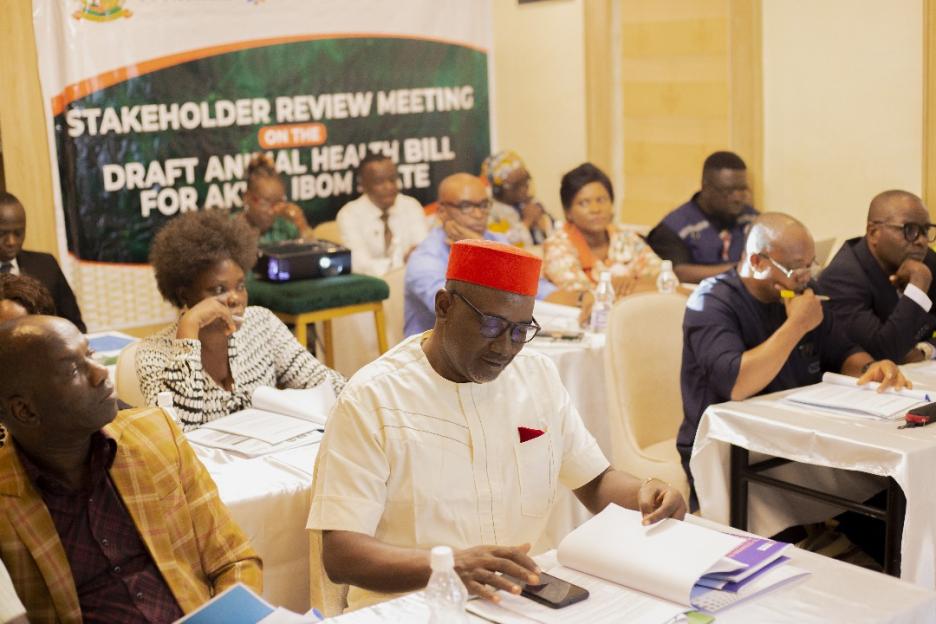
The Akwa Ibom State Government has taken steps to enhance animal health governance and disease prevention by initiating a four-day stakeholder review of the Draft Animal Health Bill.
In partnership with Resolve to Save Lives (RTSL) and Orixine Consulting, this initiative gathers federal and state experts, including representatives from the Nigeria Centre for Disease Control (NCDC) and the Federal Ministry of Agriculture, to evaluate the bill, address regulatory gaps, and improve coordination among animal, human, and environmental health sectors.
During the opening session, Dr. Teddy Essien, Director of Veterinary Services and representative of the Honourable Commissioner for Agriculture, emphasized the necessity for a strong legal framework to enhance animal health governance.
“Enhancing the State’s legal framework is vital for accountability, improved coordination, and effective disease prevention,” he stated.
Emmanuel E. Essien, Director of Legal Drafting at the Ministry of Justice, affirmed the Ministry’s dedication to the reform process, mentioning that updating the law signifies positive advancements in Akwa Ibom.
Additionally, representatives from the Ministries of Environment, Local Government, and Trade and Investment highlighted the significance of incorporating food safety, environmental, and commercial factors into the Bill.
Dr. Rabi Usman from RTSL underscored the crucial connection between animal and human health, noting that numerous emerging diseases are zoonotic in nature.
She reiterated RTSL’s commitment to strengthening Nigeria’s public health legal framework, referencing successful initiatives in states like Kaduna, Kano, and Jigawa.
Aniekan Akpan from Orixine Consulting characterized the initiative as a “bold step” towards aligning public and animal health laws and reaffirmed Orixine’s technical assistance in the drafting process.
The review centers on essential provisions of the Draft Animal Health Bill, which include the establishment of State Veterinary Services, enhanced disease surveillance systems, explicit reporting and movement control requirements, reinforced abattoir regulations, waste management standards, and coordination under the One Health framework.
Participants are tasked with ensuring the Bill aligns with national regulations, including the International Health Regulations (IHR 2005) and the National Animal Disease Surveillance System.
The four-day meeting is anticipated to conclude with a unified draft of the Animal Health Bill and a roadmap for submission to the State Executive Council, representing a significant advancement in modernizing Akwa Ibom’s animal health legislation and protecting public health.
Frequently Asked Questions
What is the purpose of the Draft Animal Health Bill?
The Draft Animal Health Bill aims to strengthen animal health governance and disease prevention through improved legal frameworks and coordination among health sectors.
Who are the key stakeholders involved in the review process?
Key stakeholders include federal and state experts, representatives from the Nigeria Centre for Disease Control (NCDC), the Federal Ministry of Agriculture, as well as partners like Resolve to Save Lives (RTSL) and Orixine Consulting.
What are some key provisions being reviewed in the Draft Animal Health Bill?
The review focuses on establishing State Veterinary Services, enhancing disease surveillance systems, and improving reporting requirements, abattoir regulations, waste management standards, and coordination under the One Health framework.